Bipolar disorder, formerly known as manic depression, is a
psychological disorder characterized by mood swings.
Bipolar disorder is a
mental health condition that causes abnormal changes in energy, mood, activity
levels, and the ability to perform day-to-day tasks.
Major symptoms may include
emotional highness (mania or hypomania) and elevation (depression). They can be
of varying intensity with periods of stability and stillness.
There are 4 basic
types of bipolar disorder; bipolar I disorder, bipolar II disorder, cyclothymic
disorder and bipolar disorder due to a medical health problem or other substance
abuse.
All of them include obvious changes in mood, energy and activity levels.
psychological disorder characterized by mood swings.
Bipolar disorder is a
mental health condition that causes abnormal changes in energy, mood, activity
levels, and the ability to perform day-to-day tasks.
Major symptoms may include
emotional highness (mania or hypomania) and elevation (depression). They can be
of varying intensity with periods of stability and stillness.
There are 4 basic
types of bipolar disorder; bipolar I disorder, bipolar II disorder, cyclothymic
disorder and bipolar disorder due to a medical health problem or other substance
abuse.
All of them include obvious changes in mood, energy and activity levels.
 |
| How to prevent mood swings and bipolar disorder (manic depressive episodes)? |
Bipolar
Disorder – Symptoms, Types, Causes and Complications – How to Prevent Mood
Swings and Manic Depression
What is Bipolar Disorder?
Bipolar
disorder, formerly known as “manic depressive psychosis” is a psychological
disorder characterized by mood imbalance.
disorder, formerly known as “manic depressive psychosis” is a psychological
disorder characterized by mood imbalance.
Bipolar
disorder is a psychological
state of mind that causes excessive mood swings that include
elevations (mania or mild mania) and emotional depression. The
disease may be serious and may pose a serious obstacle to daily life
functioning.
disorder is a psychological
state of mind that causes excessive mood swings that include
elevations (mania or mild mania) and emotional depression. The
disease may be serious and may pose a serious obstacle to daily life
functioning.
The range of
mood swings or bipolar disorder may occur rarely or several times a year.
mood swings or bipolar disorder may occur rarely or several times a year.
While most
individuals will experience some emotional symptoms among the groups, some may
not suffer any of them.
individuals will experience some emotional symptoms among the groups, some may
not suffer any of them.
Extreme mood
changes in bipolar disorder may last for weeks, or even a few months, to
disrupt the management of normal life in people who suffer from it. It also
affects the family and the circle of close friends.
changes in bipolar disorder may last for weeks, or even a few months, to
disrupt the management of normal life in people who suffer from it. It also
affects the family and the circle of close friends.
When you
become depressed, you may feel sad or desperate, lose interest or enjoy most
activities.
become depressed, you may feel sad or desperate, lose interest or enjoy most
activities.
When your
mood turns into mania or hypomania, you may feel jubilant, full of energy, or
unusually angry.
mood turns into mania or hypomania, you may feel jubilant, full of energy, or
unusually angry.
These mood
swings can affect sleep, energy, activity, decision-making, behavior,
and the ability to think clearly.
swings can affect sleep, energy, activity, decision-making, behavior,
and the ability to think clearly.
Much of
recent research suggests that bipolar disorder has many symptoms, which is why
many people with this disorder are not diagnosed.
recent research suggests that bipolar disorder has many symptoms, which is why
many people with this disorder are not diagnosed.
The disorder
of manic depressive psychosis is generally worse if not treated.
of manic depressive psychosis is generally worse if not treated.
The
proportion of people who commit
suicide due to bipolar disorder is high.
proportion of people who commit
suicide due to bipolar disorder is high.
Although
bipolar disorder is a chronic condition for life, you can control mood swings
and other symptoms.
bipolar disorder is a chronic condition for life, you can control mood swings
and other symptoms.
In most
cases, bipolar disorder can be treated by appropriate and effective medication
and psychological
counseling, and life can be managed naturally, pleasantly and fruitfully.
cases, bipolar disorder can be treated by appropriate and effective medication
and psychological
counseling, and life can be managed naturally, pleasantly and fruitfully.
(adsbygoogle = window.adsbygoogle || []).push({});
Symptoms of Bipolar Disorder
There are
several types of bipolar disorder and related disorders. They may include
bipolar I, Bipolar II, cyclothymia, NOS, etc.
several types of bipolar disorder and related disorders. They may include
bipolar I, Bipolar II, cyclothymia, NOS, etc.
Symptoms of
bipolar disorder differ according to the types of BD and qualities of mania,
hypomania, and depression.
bipolar disorder differ according to the types of BD and qualities of mania,
hypomania, and depression.
Symptoms can
cause unexpected changes in mood and behavior, leading to severe distress and
difficulty in life.
cause unexpected changes in mood and behavior, leading to severe distress and
difficulty in life.
Types of Bipolar Disorder
Bipolar
disorder can be divided into two main types:
disorder can be divided into two main types:
Bipolar I
disorder: Type
1 is marked by one or more manic episodes
or mixed episodes; it means at least one mania you may have
preceded or followed by hypomanic episodes.
disorder: Type
1 is marked by one or more manic episodes
or mixed episodes; it means at least one mania you may have
preceded or followed by hypomanic episodes.
A person
usually suffers from periods of depression as well. Bipolar I is characterized
by severe manic episodes.
usually suffers from periods of depression as well. Bipolar I is characterized
by severe manic episodes.
In some
cases, mania can lead to separation from reality (psychosis).
cases, mania can lead to separation from reality (psychosis).
Bipolar
II disorder: You
have had at least one major depression and at least one mild mania, but you
have never had a mania.
II disorder: You
have had at least one major depression and at least one mild mania, but you
have never had a mania.
Bipolar
II has diagnosed at least one episode of hypomania after one or more
major depressive episodes, with possible intervals of mood level between the
episodes.
II has diagnosed at least one episode of hypomania after one or more
major depressive episodes, with possible intervals of mood level between the
episodes.
The hypomanic episode,
in its symptoms, resembles a normal mania but its symptoms are milder, lasting
only a few days, and not very dangerous.
in its symptoms, resembles a normal mania but its symptoms are milder, lasting
only a few days, and not very dangerous.
When the
bouts of bipolar disorder occur, the patient may feel joyful, with a certain
concern and changes in his daily performance, but is generally able to continue
his normal life, without having to stay in the hospital.
bouts of bipolar disorder occur, the patient may feel joyful, with a certain
concern and changes in his daily performance, but is generally able to continue
his normal life, without having to stay in the hospital.
In Type II
depressive episodes, the periods of depression are longer than in manic
episodes.
depressive episodes, the periods of depression are longer than in manic
episodes.
Cyclothymia: This is a mild type of bipolar
disorder. Mood disturbance involves mood swings and fluctuations at a great
pace and speed, but peak moments and rocky moments are not as serious as a
bipolar disorder at its peak.
disorder. Mood disturbance involves mood swings and fluctuations at a great
pace and speed, but peak moments and rocky moments are not as serious as a
bipolar disorder at its peak.
Disturbance
of cyclic mood: You
have had several episodes of hypomania for at least two years – or one year in
children and teenagers – or a bout of depression (but less severe than severe
depression).
of cyclic mood: You
have had several episodes of hypomania for at least two years – or one year in
children and teenagers – or a bout of depression (but less severe than severe
depression).
Not
Otherwise Specified (NOS): Bipolar disorder that does not follow a certain pattern is called
“Not Otherwise Specified (NOS)” (e.g. the recurrence
of hypomanic episodes without depressive symptoms, or very rapid
fluctuations and swings between some manic symptoms and some
depressive symptoms).
Otherwise Specified (NOS): Bipolar disorder that does not follow a certain pattern is called
“Not Otherwise Specified (NOS)” (e.g. the recurrence
of hypomanic episodes without depressive symptoms, or very rapid
fluctuations and swings between some manic symptoms and some
depressive symptoms).
Other
types of bipolar disorder: These include, for example, bipolar disorders and related
disorders caused by the use of certain drugs, alcohol or medical condition,
such as Cushing’s disease, multiple sclerosis or stroke.
types of bipolar disorder: These include, for example, bipolar disorders and related
disorders caused by the use of certain drugs, alcohol or medical condition,
such as Cushing’s disease, multiple sclerosis or stroke.
Bipolar
disorder of type II is not a mild form of bipolar disorder of type I, but its
diagnosis is separate.
disorder of type II is not a mild form of bipolar disorder of type I, but its
diagnosis is separate.
While manic
episodes of type I bipolar disorder can be acute and serious, individuals with
type 2 bipolar disorder can become depressed for longer periods, which can
result in significant disability.
episodes of type I bipolar disorder can be acute and serious, individuals with
type 2 bipolar disorder can become depressed for longer periods, which can
result in significant disability.
Although
bipolar disorder can occur at any age, it is usually diagnosed during the teen
years or early twenties.
bipolar disorder can occur at any age, it is usually diagnosed during the teen
years or early twenties.
Symptoms may
vary from person to person and may vary over time.
vary from person to person and may vary over time.
 |
| Bipolar disorder – symptoms, types, causes and complications |
Stages
of Bipolar Disorder
Symptoms of
manic depressive psychosis generally, change behavior patterns.
manic depressive psychosis generally, change behavior patterns.
Primary
signs and symptoms may range from mild to very severe and very serious.
signs and symptoms may range from mild to very severe and very serious.
There may
also be periods of life during which there is no effect.
also be periods of life during which there is no effect.
Mania and Hypomania
Mania and
hypomania are two different types of seizures, but they have the same symptoms.
hypomania are two different types of seizures, but they have the same symptoms.
Mania is an
extremely elevated, expansive and excitable mood usually associated with
bipolar disorder.
extremely elevated, expansive and excitable mood usually associated with
bipolar disorder.
Hypomania is
an emotional state characterized by a distinct period of persistently elevated
or irritable mood and persistent disinhibition that differs from the typical
behavior of a person when in a non-depressed state.
an emotional state characterized by a distinct period of persistently elevated
or irritable mood and persistent disinhibition that differs from the typical
behavior of a person when in a non-depressed state.
Mania is
more severe than hypomania and causes more obvious problems in work, school,
and social activities, as well as difficulties in relationships with others.
more severe than hypomania and causes more obvious problems in work, school,
and social activities, as well as difficulties in relationships with others.
Mania may
also lead to separation from reality (psychosis) and requires hospitalization
for treatment.
also lead to separation from reality (psychosis) and requires hospitalization
for treatment.
1. The stage of mania in
bipolar disorder
Signs and
symptoms that may appear at manic episodes and hypomanic episodes in bipolar
disorder may include:
symptoms that may appear at manic episodes and hypomanic episodes in bipolar
disorder may include:
- Hyper
Optimism or immensely provocative - An excessive
feeling of well-being and self-confidence - A flaw in
the arbitration of the mind - Poor
decision-making – for example, excessive purchase, sexual exposure or foolish
investment - Fast speech
or extraordinary chatter - The
frequency of ideas or aggressive behavior - Passionate
emotions - Increased
physical activity - Serious
behavior character - Excessive
spending on money - Strong
desire to work and achieve goals - Strong
sexual desire - Lack of need
to sleep - Miles to
easily distract - Inability to
concentrate - Consumption
of addictive substances
(adsbygoogle = window.adsbygoogle || []).push({});
2. The stage of depression
in bipolar disorder
Severe
depressive episodes include severe symptoms that cause significant difficulty
in performing daily activities, such as work, school, social activities, or
relationships.
depressive episodes include severe symptoms that cause significant difficulty
in performing daily activities, such as work, school, social activities, or
relationships.
Signs and
symptoms that may appear in the severe depressive episodes in bipolar disorder
may include:
symptoms that may appear in the severe depressive episodes in bipolar disorder
may include:
- A depressed
state of mood, such as feeling sad, empty, desperate, or crying - Despair and
hopelessness - Loss of
weight in the absence of a good diet, weight gain, low appetite or height - Thinking
about suicide or planning it - The feeling
of lack of value or seriousness or inappropriate guilt - Either
excessive insomnia or excessive sleep (sleep disorder) - Either
boredom or slow behavior - Appetite
disorder or a sense of unhappiness - Fatigue or
loss of energy - Lack of
interest in daily activities - Low ability
to think, focus, or frequency - Anxiety and
nervousness - Chronic pain
without apparent cause
Other types of bipolar disorder symptoms:
In addition,
some people with bipolar disorder remain vulnerable to recurrent and frequent
bipolar disorder.
some people with bipolar disorder remain vulnerable to recurrent and frequent
bipolar disorder.
This
definition applies to at least four mood swings within twelve months. These
mood swings occur quickly, sometimes a few hours apart. When it comes to a
mixed situation of bipolar disorder, the symptoms of both mania and depression
appear simultaneously and in parallel.
definition applies to at least four mood swings within twelve months. These
mood swings occur quickly, sometimes a few hours apart. When it comes to a
mixed situation of bipolar disorder, the symptoms of both mania and depression
appear simultaneously and in parallel.
Acute
bipolar disorder, in particular, can lead to a total psychotic disorder (psychosis)
or even to an absolute separation from reality.
bipolar disorder, in particular, can lead to a total psychotic disorder (psychosis)
or even to an absolute separation from reality.
Symptoms of
absolute depressive mania may include hearing sounds or seeing hallucination
and strong and real faith in things that are not true.
absolute depressive mania may include hearing sounds or seeing hallucination
and strong and real faith in things that are not true.
Symptoms of bipolar disorder in children and
adolescents
It can be
difficult to identify the symptoms of bipolar disorder in children and
adolescents.
difficult to identify the symptoms of bipolar disorder in children and
adolescents.
It is often
difficult to ascertain whether these are normal fluctuations, stress or trauma
results, or signs of mental health problems other than bipolar disorder.
difficult to ascertain whether these are normal fluctuations, stress or trauma
results, or signs of mental health problems other than bipolar disorder.
Children and
adolescents may experience major depressive episodes or manic episodes or mild
obsessions, but the pattern may differ from that of adults with bipolar
disorder. The mating can quickly change during seizures.
adolescents may experience major depressive episodes or manic episodes or mild
obsessions, but the pattern may differ from that of adults with bipolar
disorder. The mating can quickly change during seizures.
Some
children may experience periods without mood symptoms between seizures.
children may experience periods without mood symptoms between seizures.
The most
prominent signs of bipolar disorder in children and adolescents may include
severe mood swings different from their normal mood swings.
prominent signs of bipolar disorder in children and adolescents may include
severe mood swings different from their normal mood swings.
Other characteristics of bipolar disorder
Signs of bipolar disorder I and II may include other characteristics, such as distress, anxiety, depression, psychosis, etc.
Timing may include symptoms and a diagnostic type such as mixed or rapid cycling.
Also, bipolar symptoms may occur during pregnancy or change during the seasons.
(adsbygoogle = window.adsbygoogle || []).push({});
Causes and Risk Factors of
Bipolar Disorder
No real
information is available, so far and the exact cause of bipolar disorder is not
well known. However, there appears to be a range of biochemical processes
(biochemistry), genetic and environmental factors that influence the appearance
of bipolar disorder:
information is available, so far and the exact cause of bipolar disorder is not
well known. However, there appears to be a range of biochemical processes
(biochemistry), genetic and environmental factors that influence the appearance
of bipolar disorder:
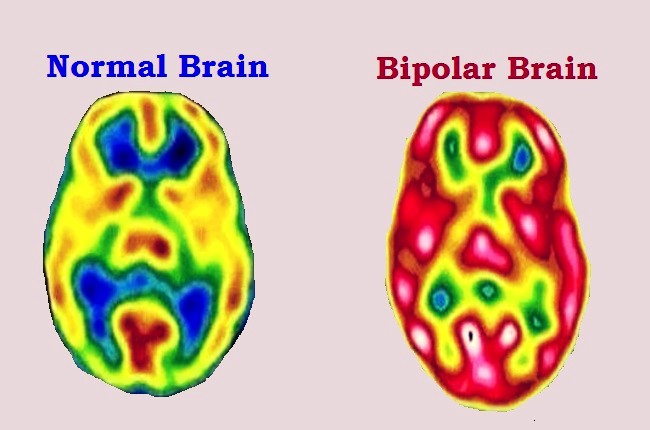
Biochemical
processes: Research
conducted using advanced technological means by imaging shows that some bipolar
disorder patients have significant physiological changes in their brains.
processes: Research
conducted using advanced technological means by imaging shows that some bipolar
disorder patients have significant physiological changes in their brains.
Genetic
factors: Some
studies suggest that bipolar disorder is more common in people with close
relatives (blood relatives), who also have bipolar disorder.
factors: Some
studies suggest that bipolar disorder is more common in people with close
relatives (blood relatives), who also have bipolar disorder.
Environmental
factors: It is
widely believed that the environment has a certain central role as a cause of
bipolar disorder.
factors: It is
widely believed that the environment has a certain central role as a cause of
bipolar disorder.
But research on twin twins has shown that one
twin can develop bipolar disorder while the other twin does not.
twin can develop bipolar disorder while the other twin does not.
This means
that genetic factors alone are not enough to stimulate the emergence of the
disease.
that genetic factors alone are not enough to stimulate the emergence of the
disease.
It is
estimated that about 1% of the total population, usually, suffers from bipolar
disorder.
estimated that about 1% of the total population, usually, suffers from bipolar
disorder.
However, a
number of researchers believe that bipolar disorder is occurring in succession
and that an additional number of people develop other forms of the disorder,
bringing together the proportion of people with autism to 6% of the total
population.
number of researchers believe that bipolar disorder is occurring in succession
and that an additional number of people develop other forms of the disorder,
bringing together the proportion of people with autism to 6% of the total
population.
Moreover, it
is possible that some people with the disorder are not diagnosed, because they
do not go for medical treatment, as a result of the false diagnosis that they
are depressed, as their symptoms do not fit the diagnostic criteria adopted.
is possible that some people with the disorder are not diagnosed, because they
do not go for medical treatment, as a result of the false diagnosis that they
are depressed, as their symptoms do not fit the diagnostic criteria adopted.
Type I
bipolar disorder affects an equal number of women and men alike, while Type II,
the more frequent type of disorder, is more prevalent among women.
bipolar disorder affects an equal number of women and men alike, while Type II,
the more frequent type of disorder, is more prevalent among women.
This
disorder, of both sexes, occurs in ages 15 to 30 years, in most cases.
disorder, of both sexes, occurs in ages 15 to 30 years, in most cases.
Factors that
may increase the risk of manic depressive disorder:
may increase the risk of manic depressive disorder:
- Close to the
blood relatives suffering from bipolar disorder - Periods of
extreme tension - Consumption
of addictive substances - Sharp
changes in lifestyle, such as the death of a loved one
What
Part of the Brain is Affected by Bipolar Disorder?
 |
| What are the effects of bipolar disorder on the brain? |
Complications of Bipolar Disorder
Bipolar
disorder, if not properly and effectively treated, can lead to serious
emotional and psychological problems that may be accompanied by economic and
even legal problems that affect the various areas of the daily life of the
patient.
disorder, if not properly and effectively treated, can lead to serious
emotional and psychological problems that may be accompanied by economic and
even legal problems that affect the various areas of the daily life of the
patient.
Complications
that may result from bipolar disorder may include:
that may result from bipolar disorder may include:
- Suicidal
thoughts and action - Hyperactivity
of alcohol and addictive substances - Judicial
problems - Economic
problems - Problems in
married life - Isolation
and social exclusion - Dysfunctional
tasks, at work, at school or at home - Concurrent
health conditions
If you
suffer from bipolar disorder, you may also suffer from another health problem
that needs to be treated alongside bipolar disorder.
suffer from bipolar disorder, you may also suffer from another health problem
that needs to be treated alongside bipolar disorder.
Some cases
may increase the symptoms of bipolar disorder or reduce the chances of
successful treatment.
may increase the symptoms of bipolar disorder or reduce the chances of
successful treatment.
Examples
include:
include:
- Anxiety
disorders - Eating
disorders - Attention
Deficit Hyperactivity Disorder (ADHD) - Problems of
alcoholic or narcotic substances - Physical
health problems, such as heart disease, thyroid problems, headache and obesity
(adsbygoogle = window.adsbygoogle || []).push({});
When to visit a doctor
Despite
extreme mood swings, people with bipolar disorder often do not realize the
extent of the damage their emotional instability causes to their lives and the
lives of their loved ones, and do not receive the treatment they need.
extreme mood swings, people with bipolar disorder often do not realize the
extent of the damage their emotional instability causes to their lives and the
lives of their loved ones, and do not receive the treatment they need.
If you are
like some people with bipolar disorder, you may enjoy orgasmic feelings and
more productive cycles.
like some people with bipolar disorder, you may enjoy orgasmic feelings and
more productive cycles.
However,
this euphoria always follows an emotional breakdown, which can cause you to be
depressed and depressed – and even bring you into a financial, legal, or
personal relationship.
this euphoria always follows an emotional breakdown, which can cause you to be
depressed and depressed – and even bring you into a financial, legal, or
personal relationship.
If you have
any symptoms of depression or mania, visit your doctor or mental health
professional.
any symptoms of depression or mania, visit your doctor or mental health
professional.
Bipolar
disorder does not improve on its own. Treatment from a psychologist with
experience in treating bipolar disorder can help you control your symptoms.
disorder does not improve on its own. Treatment from a psychologist with
experience in treating bipolar disorder can help you control your symptoms.
Bipolar Disorder Prevention
There is no
proven way to prevent bipolar disorder completely; however, some
precautionary measures and therapies may help prevent bipolar disorder
or other mental health conditions.
proven way to prevent bipolar disorder completely; however, some
precautionary measures and therapies may help prevent bipolar disorder
or other mental health conditions.
If you are
diagnosed with bipolar disorder, there are some strategies that can help
prevent simple symptoms from turning into full episodes of mania or depression:
diagnosed with bipolar disorder, there are some strategies that can help
prevent simple symptoms from turning into full episodes of mania or depression:
Be aware
of warning signs: Early treatment of the symptoms may prevent the seizure from getting
worse.
of warning signs: Early treatment of the symptoms may prevent the seizure from getting
worse.
You may have
discovered a pattern for your bipolar disorder and the stimuli that lead to it.
discovered a pattern for your bipolar disorder and the stimuli that lead to it.
Continue
with your doctor if you feel that you are entering into a bout of depression or
obsession. Engage your family and friends in the warning note.
with your doctor if you feel that you are entering into a bout of depression or
obsession. Engage your family and friends in the warning note.
Avoid
drugs and alcohol: Drinking
alcohol and recreational drug use may exacerbate symptoms and increase
the likelihood of recurrence.
drugs and alcohol: Drinking
alcohol and recreational drug use may exacerbate symptoms and increase
the likelihood of recurrence.
Take
medications exactly as directed: If you tend to stop treatment suddenly, but do
not do.
medications exactly as directed: If you tend to stop treatment suddenly, but do
not do.
Stopping
treatment or reducing the dose may cause the effects of withdrawal or worsening
of your symptoms.
treatment or reducing the dose may cause the effects of withdrawal or worsening
of your symptoms.
(adsbygoogle = window.adsbygoogle || []).push({});