irrational and unrealistic fear of an object, animal, person, activity or
situation.
If you suffer from a phobia, you may experience deep feelings
of dread or panic when you encounter your source of fear.
Phobia can be a
permanent condition, causing violent physical and psychological reactions, and
it can affect your ability to do business normally.
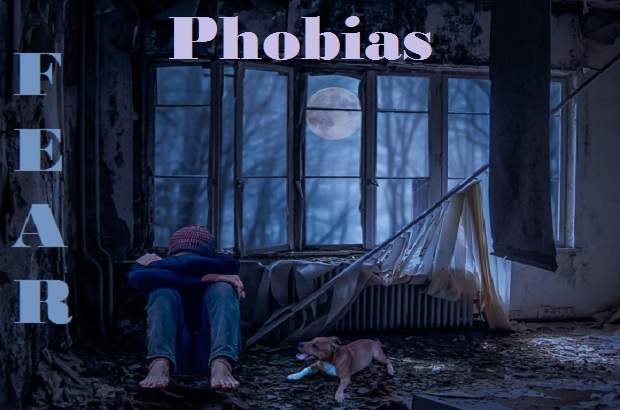 |
| Everything You Need to Know about Phobias |
Everything You Need to
Know about Phobias: Symptoms, Types, Diagnosis, and Treatment
such as place, heights, phenomena, some voices, fear of animals and
others. Actually, Phobias have no obvious reasons.
The term phobia, which
means phobia in its technical use in psychiatry, is used to construct words
that describe a state of irrational, unnatural, unjustified, distracting, or
disruptive fear of daily life as a mental disorder.
It is also used in
chemistry to describe chemical deviations, in biology to describe organisms
that hate some conditions, in the medicine to describe hypersensitivity to
certain stimuli, usually sensual (e.g. light phobia).
In common use, phobias also
constitute words that describe hate or aversion to a particular thing or
subject.
(adsbygoogle = window.adsbygoogle || []).push({});
What is Phobia?
type of anxiety disorder that causes a person to experience excessive,
exaggerated and irrational fears about the condition, living creature, place or
object.
The term ‘phobia’ is often used to refer to the fear of a particular
trigger. When a person is intimidated, they often consider it dangerous to
shape their life.
When a person has to face the source of their fear, then the
person will experience severe distress.
threat created by the cause of terror. This can prevent them from working
normally and sometimes leads to panic attacks. It is believed that phobia
usually emerges from extremely painful experiences.
Fear is that the person
gets transferred from one situation to another, or reoccurs throughout life.
For example, a person develops the fear of water when he sees a drowning
incident which is unforgettable.
Phobias are more serious than simple fear
sensation and are not confined to the fear of specific triggers. Individuals
should know that their fear is strange, they can not control the fear
reaction.
chest pain, etc.. Fear usually results in the intense start of
fear and presence for more than six months.
The feeling of anxiety can only be
made by thinking about the purpose of fear.
become very sticky, or try to hide behind the feet of the parents or something.
They can throw mesmerized too to show their crisis.
The phobias family, which
starts during childhood, can also be seen by the fear of a family member.
Phobias and anxiety disorders are relatively common.
As long as he is not
exposed to the source of fear, a person does not experience any symptoms.
therapy using fear reduction techniques. In many cases, antidepressant
medication has proved useful during the early stages.
How many types of phobias are there?
 |
| Classification of phobias – Phobias-Symptoms, Types, Diagnosis and Treatment |
Classification of Phobias
(APA), most of the phobias are classified into three categories, and this type
of phobias is also considered to be sub-types of anxiety disorder. The
categories are:
(adsbygoogle = window.adsbygoogle || []).push({});
Specific phobias
fears of specific triggers, special items, or social situations that fall in
immediate anxiety and can sometimes cause panic attacks.
These are known as
simple fear because they can be linked to an identifiable reason that can not
often be in a person’s everyday life, like snakes. Therefore, they are unlikely
to stay day-to-day in an important way.
Typical fear can include fear of losing
control and throwing from fear with the encounter. It can be further divided
into five categories: natural environment type, transit type,
blood-injection-injury type animal type, and others. Most common types of specific phobia
are:
Environmental phobia: Environmental
phobia when someone is involved in specific natural conditions or events (the
other fears such as astrophobia
and acrophobia in fear.
such as visiting the dentist, Fear of flying, Fear of becoming ill, Fear
of water Fear of being in constricted, confined spaces, etc.
phobia: An attack
occurs due to the medical process and is sometimes frightened by seeing injury
or bleeding; In some cases, people can lose their consciousness with physical
fear.
Animal phobia: It is also known as zoophobia, this irrational
fear is such that when a person has to face an animal (other phobias
associated with the animal phobia are cynophobia, apiphobia, and
ornithophobia).
People can develop a fear of almost anything. In addition, as society changes,
the list of potential phobias changes. For example, nomophobia is afraid to be
without a cell phone or computer.
In children, blood-injection-injury phobia
and fear associated with the natural environment, animals usually develop
between the ages of 7 and 9, and they are reflected in normal development.
Social Phobia, or Social Anxiety
taken alone or judged by others in social situations. Unlike typical Phobias,
social fear involves the fear of public circumstances and investigations, which
causes embarrassment or insult in clinical norms.
The idea of large social
gatherings is frightening for a person with social anxiety. It’s not like shy.
These types of phobia vary in severity among individuals.
Some people can
easily avoid the subject of their fears and can face relatively little concern
on that fear. Others have to face full panic attacks with all related disabling
symptoms.
Most people understand that they are suffering from an irrational
fear, but their terror is powerless to override the reaction. These individuals
often report dizziness, bladder or bowel control, tachypnea, the feeling of
pain, and shortness of breath.
 |
| Phobias-Symptoms, Types, Diagnosis and Treatment |
Agoraphobia
situations, from which a person has to experience extreme terror, such as in
the elevator or outside the house.
Agoraphobia is also known as a complex
phobia because its triggers are less easily recognized. People with complex
phobias may also be able to avoid triggers, such as leaving the house or being
in a big crowd.
form of fear of normal places, but it is a small place, such as social
embarrassment (social agoraphobia), fear of pollution (fear of microbes,
possibly complex-obsessive-compulsive disorder) or Post Traumatic stress
disorder (PTSD) which is related to the trauma that occurs outside the door. People with
agoraphobia increase the risk of panic disorder.
Complex
phobias
than disruptive or specific phobias. For example, people who experience
Agoraphobia may also be afraid of many others who are involved. These may
include monophobia, or fear of leaving alone, and claustrophobia, fear of
trapping in a closed space.
spaces, but it can be more complex than that. This kind of fear is not seen as
a threat of a certain position only, unless it does not eliminate the patient’s
feeling as if it is trapped, helpless, in terror, etc.
Agoraphobic patients are
worried about situations or places where it is difficult to escape, or
assistance will not be available on panic attacks.
transportation, go to a shopping center or stay home alone.
On the other hand,
in social phobia, a person is afraid to face life or social situations.
Patients are unusually nervous. Apart from this, the affected person may be
afraid to talk to people or to the public for fear of being humiliated.
agoraphobia or social anxiety. Researchers currently believe that complex
fears, life experiences, are due to the combination of brain chemistry and
genetics.
Symptoms
of Phobias
anxiety and depression. Complex phobia, such as fear of exposed places and
social phobia, are more likely to cause these symptoms.
Intimidated people
often deliberately avoid contact with something that causes them to become
fearful and anxious. For example, someone fearing a spider (Acrophobia) would
not want to touch a spider or even want to see a picture.
In some cases, a
person may be intimidated, where they are afraid to face themselves because
they feel very uncomfortable. It is not necessary for people to be in a
position that they are afraid to experience the symptoms of terror.
The brain
is capable of reacting to fearful situations, even if they are not really in
position. Those who have phobias, they experience the following symptoms:
 |
| Phobias-Symptoms, Types, Diagnosis and Treatment |
How do you know if you have a phobia?
Physical
symptoms
to experience feelings of terror and intense anxiety.
Panic attacks can be very
scary and disturbing. Symptoms are often without warning and without warning.
The physical effects of these sensations may include: abnormal breath,
sweating, feeling unconscious, chest pain or tightness, fast heartbeat, hot
flush or cold, butterflies sensation in the stomach, mist or pin and needles
vibrate, knee, dizziness, confusion, and deviation, dry mouth, headache,
ringing in your ears, or nausea.
Psychological
symptoms
symptoms, such as a sensation of uncontrolled anxiety when approaching the
source of fear. Not able to work properly when exposed to the trigger.
A
feeling That the source of that fear should be avoided at all cost. It is
confessed that the fear is irrational, inappropriate, and exaggerated, combined
with the inability to control emotions. These are common in the majority of
Phobias.
(adsbygoogle = window.adsbygoogle || []).push({});
How the
Brain Works during a Phobia
stress, properly recover the fearful event.
If a person has to face similar
phenomena later in life, then stressful memory in those areas of the brain,
sometimes retrieved more than once. This situation causes the body to
experience the same reaction.
Researchers have found that fear is often
associated with Amygdala, which is behind the pituitary gland in the brain.
Amygdala can trigger the release of “fight-or-flight” hormones. They
put the body and mind in a highly cautious and tense state.
Dangerous or
potentially fatal events are remembered in some areas of the brain.
Diagnosis of Phobias
clinical interview and diagnostic guidelines.
Your doctor will ask questions
about your symptoms and get information about your medical, psychological and
social history.
Diagnostic criteria may be used/used in the Diagnostic and
Statistical Manual of Mental Disorders (DSM-5) published by the American
Psychiatric Association.
Treatment
of Phobias
phobias are almost always aware of their disorder.
Awareness of the disorder
helps easily in making a great deal of diagnosis. Going to a psychologist or
psychiatrist is the first step regarding the treatment of phobias if they
have already been recognized and fear does not create serious problems.
Most people think that avoiding the source of their fear helps them stay in
control. With a specific fear, many people will not be able to take treatment
because these fears are often manageable.
It is not possible to avoid some
Phobias triggers, as is often the case of complex phobias. In these cases,
talking to a mental health professional can be the first step of recovery. Most
treatments can be cured with proper treatment. There is no cure that works for
everyone with fear.
To work, the person needs treatment. Different methods are
used to treat phobias. These methods include systematic desensitization,
progressive relaxation, virtual reality, modeling, medicine, and hypnotherapy.
Doctor, psychiatrist, or psychological behavior can recommend therapy,
medicines, or a combination of both. The purpose of therapy is to reduce the
symptoms of fear and anxiety and to help people manage their responses to their
fears.
 |
| Treatment of phobias |
What are the treatments for phobias?
Therapy
the person with fear to learn the different ways to understand and respond to
the person’s source of their fears.
Being cautious with its emotions can be
beneficial by allowing the patient to challenge pathological thoughts or
beliefs, with the purpose that the patient will realize that his fear is
irrational.
CBT can be organized in a group setting. Gradually desensitization
treatment and CBT are often successful, provided the patient is ready to bear
some inconvenience. In a clinical trial, 90% of patients did not receive any
serious response after successful CBT treatment.
CBT is also an effective
treatment for phobias in children and adolescents and has been adapted for the
use of this age.
accustomed to their fear, and eventually eliminate it. This method is used to
treat patients with extreme phobias and prolonged exposure.
In the traditional
systematic desensitization, a person is in touch with the object that they are
afraid of time so that fear and discomfort are not heavy. This controlled
exposure for anxiety-stimulating stimulus is key to the effectiveness of
exposure therapy in the treatment of specific phobias.
It has been shown that
humor is an excellent option when traditional systematic desensitization is
ineffective.
the fearful object or circumstance or survive.
People with little difficulty in
their fear usually do not need long-term contact for their fears. For example,
the person with aerophobia, or the fear of flying on the plane, can take the
following steps under guidance.
The humor includes a series of systematic
desensitization treatment activities, which include activities that express
humor with horror objects.
reprocessing (EMDR): Peer-reviewed
clinical trials have shown that EMDR is effective in treating some phobias.
Mainly used to treat post-traumatic stress disorder, EMDR has been demonstrated
effective in facilitating fearful symptoms after a specific trauma, such as
fear of dogs after dog bites.
difficult in a person’s hierarchy level. This helps the patients relax their
muscles before and during the contact with the intimidating object or incident.
and encourage to strengthen their efforts and includes doctor modeling during
subsequent exposure to fearful object and positive behavior.
In the same way as
systematic desensitization, phobic patients are gradually presented for their
scary objects. The therapeutic model has proved to be effective for children
and adolescents.
Virtual reality therapy: This technique helps frightened people to
face fearful objects. It uses virtual reality to produce scenes that can not be
possible or ethical in the physical world.
It offers some advantages over
systematic desensitization therapy. People can control scenes and can handle
reality in more reality than they can handle.
Virtual reality is more realistic
than simply visualizing a scene- The therapy is in a private room and the
treatment is effective.
(adsbygoogle = window.adsbygoogle || []).push({});
Medications
of any particular object. The following medicines are effective in treating
phobias.
are other medicinal alternatives and they have physical symptoms of anxiety
that can with fear and can stop the adrenaline’s stimulating effect,
such as perspiration, increase heart rate, blood pressure, vibrate and Can
reduce the feeling of a fast heart.
By taking beta-blockers before a phobic
event, these symptoms decrease, causing the incident to become less scary. Side
effects can include anxiety, fatigue, insomnia, and cold fingers.
medicines, such as serotonin reuptake inhibitor (SSRIs) or MAOIs, may be
helpful in some cases.
SSRIs are usually prescribed for people with Phobias.
They affect the level of serotonin in the brain, and this can result in a
better mood. SSRI can initially cause nausea, sleep problems, and headache.
If
SSRI does not work, then the doctor can determine a monoamine oxidase
inhibitor (MAOI) for social fear.
On the MOI, individuals may have to
avoid certain types of food. Side effects may include dizziness, anxiety,
headache, and insomnia.
such as sedatives can also be determined. Benzodiazepine is an example of a
tranquilizer that can be prescribed for fear. These patients can help to relax
by reducing the amount of their anxiety.
Benzodiazepines can be useful in the
severe treatment of severe symptoms, but the risk-benefit ratio is against
their long-term use in phobic disorders.
Regardless of this positive search,
benzodiazepines are used with caution. This category of drugs has been shown
effective in recent times if abuse of alcohol is used with negative behaviors
like.
method can be used alone and with the combination of systematic desensitization
for the treatment of phobia. Through hypnosis therapy, the underlying cause of
fear can be disclosed.
Hypnotherapy can eliminate conditional reactions
occurring during different conditions. Patients are first placed in a hypnosis
trance, which is a state of utmost comfort in which unconsciousness can be
recovered. This state makes patients more open to suggestions, which helps in
bringing the desired change.
Deliberately addressing old memories helps
individuals understand the phenomenon and is seen in the less dangerous light.
Fear may be due to the previous incident that the patient does not remember, an
event known as suppression. The brain suppresses painful memories from
conscious mind until the person is ready to deal with them.
- Phobia is a common form of anxiety disorder, and distribution
is odd with age and gender.
Phobias can be a source of real and ongoing crisis for a person. However, they
are cured in most cases and are often worth avoiding the source of fear. If you
have fear, then one thing that you should never be afraid of is to ask for
help.
Women are almost four times more likely to be afraid of animals – a higher dip
than all specific or generalized phobias or social fears. Social phobias are
more common in girls than in boys.
Most phobias are classified into three categories and such phobias are also
considered to be sub-types of anxiety disorders: specific fear, social phobia,
or social anxiety, agoraphobia, animal phobia, etc.
If people are aware of the purpose of their fear, they are likely to experience
feelings of terror and intense anxiety. Panic attacks can be very scary and
disturbing.
Symptoms of phobia often occur suddenly and without warning.
Most phobias can be cured with proper treatment. There is no cure that works
for everyone with fear.
Read Here: Expert Tips To Conquer Fear Of Flying
(adsbygoogle = window.adsbygoogle || []).push({});