Why Did NASA Choose Glycol-Water Active Thermal Control System for Orion?
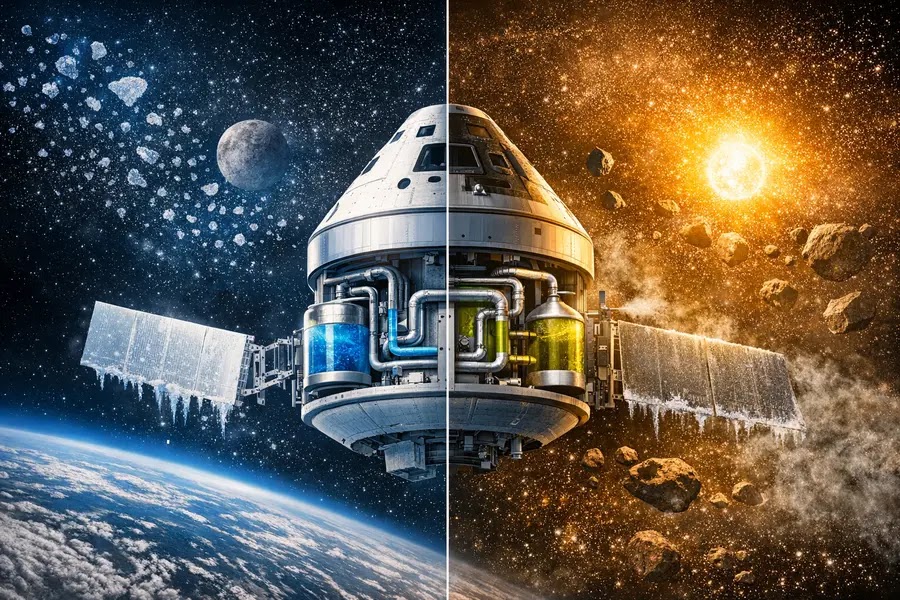
Discover why NASA selected a glycol-water Active Thermal Control System for Orion over ammonia, balancing safety, efficiency and crew health in space.
Discover why NASA selected a glycol-water Active Thermal Control System for Orion over ammonia, balancing safety, efficiency and crew health in space.

The Overview Effect is now evolving into a luxury commodity—from space tourism to elite experiences, redefining awe and perspective and raising debates.

Time dilation slightly slows astronauts’ biology, but the effect is minimal. Microgravity and radiation impact the body far more during deep space missions.

Asteroid caves might shield astronauts from deadly cosmic radiation. Explore the science behind natural shelters and space habitats for deep space survival.
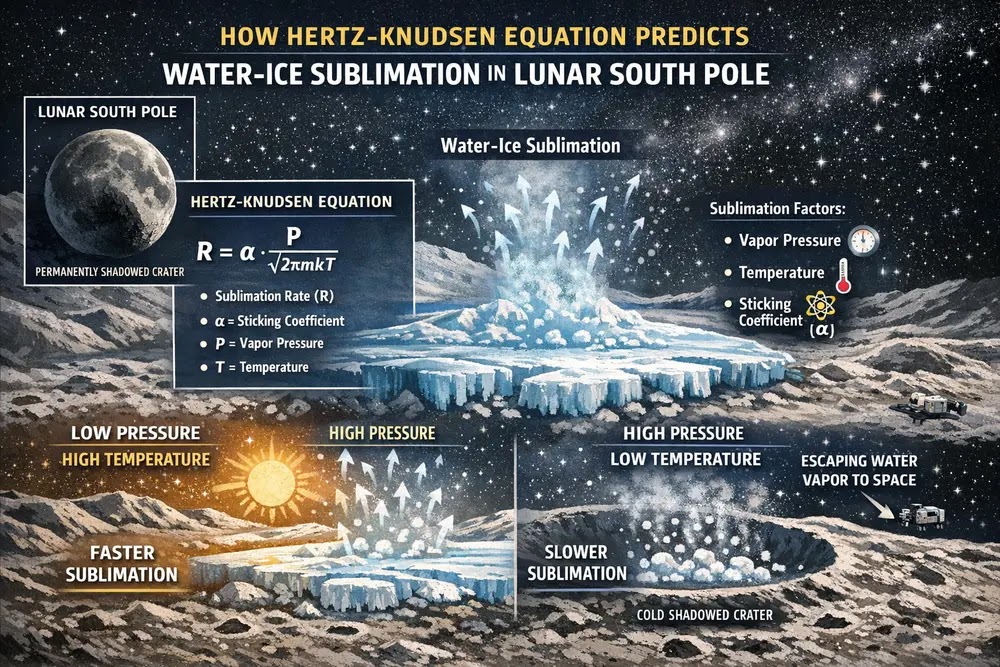
How does ice last billions of years on the Moon? The Hertz-Knudsen equation reveals the math behind sublimation in permanently shadowed polar craters.

Learn what space anemia is and the authentic research behind why microgravity triggers massive red blood cell destruction in astronauts aboard the ISS.

Explore how deep space radiation impacts astronauts’ eye health, increasing risks of early-onset cataracts. Explore scientific evidence and protective measures.
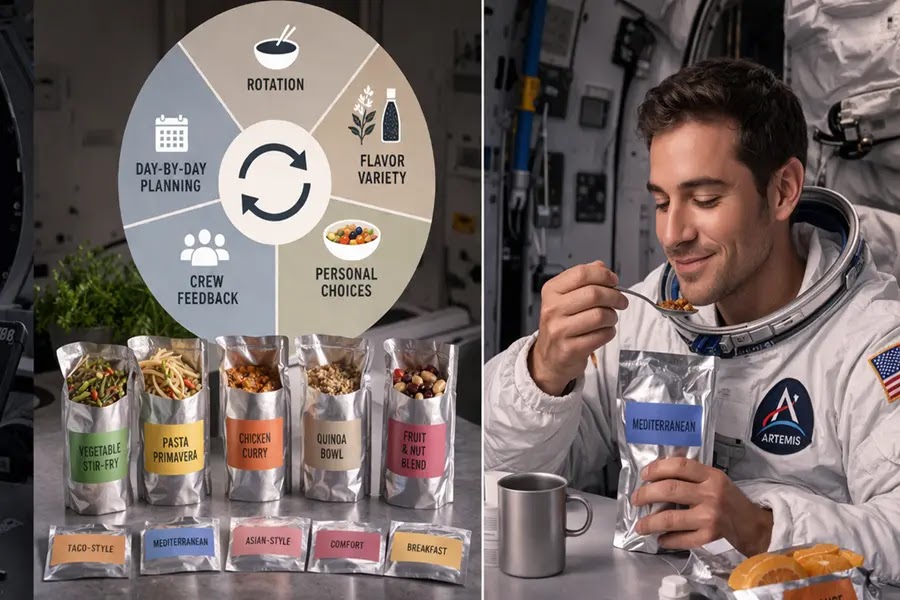
Discover how Artemis II astronauts beat menu fatigue with 189 items, 58 tortillas and spicy condiments on their 10-day deep space lunar flyby mission.
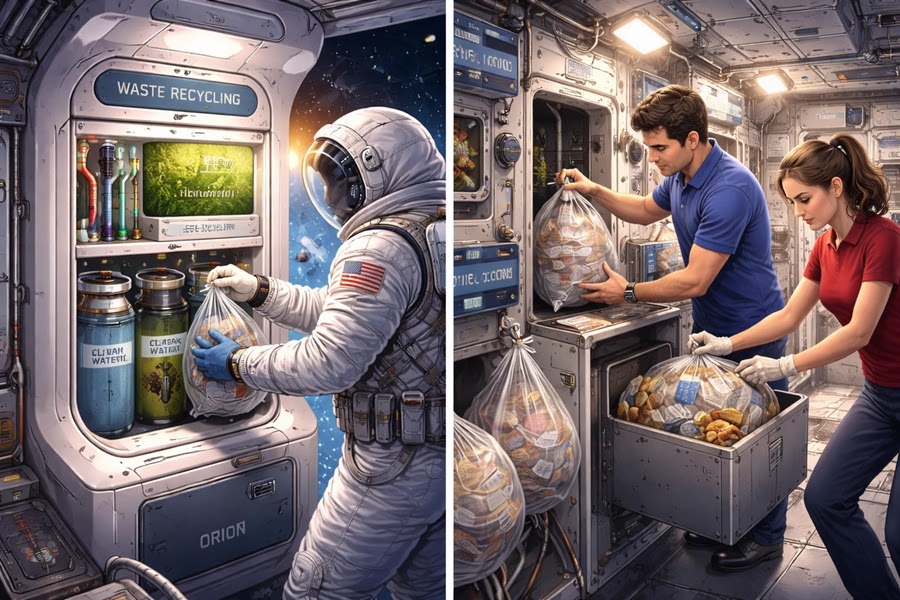
Explore how NASA’s Orion capsule advanced waste recycling system differs from the ISS, enabling safe and sustainable future deep space missions beyond Earth.

Explore how astronauts sleep, eat and manage waste inside NASA’s Orion capsule, adapting to microgravity with innovative systems for deep-space living.