






Facebook as an Educational Tool – A Brainstorming Way to Motivate Children to Learn

Facebook as an Educational Tool Facebook as an Educational Tool: A Brainstorming Way to Motivate Children to Learn  Introduction Facebook is no longer a social network that needs to be defined, as it has educational uses, which are constantly evolving. In this article, we will give you a set of ideas and methods that will … Read more

Technology and Digital Citizenship: How to Sponsor Global Digital Society

Digital citizenship refers to the responsible use of information technology by anyone who uses digital devices, computers and the Internet in order to engage in society, politics, and government on any level. Digital citizenship is one of the most important pillars on which the state relies on finding solutions to issues that concern society. As … Read more

Supercomputing Helps Study Two-Dimensional Materials – Gauss Centre for Supercomputing

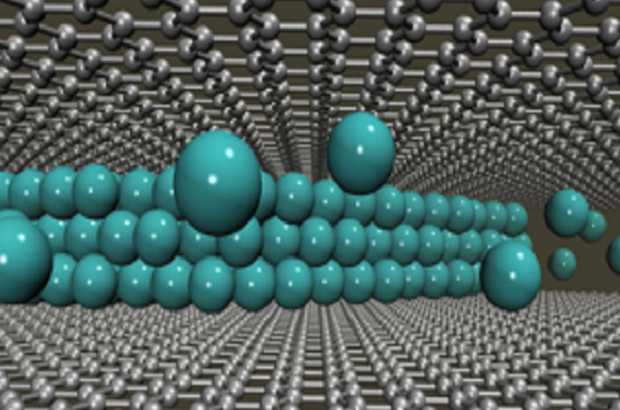
Supercomputing helps in studying two-dimensional materials. High-performance computing (HPC) helps material scientists study the properties of materials at the atomic scale and under extreme conditions and understand experiments to monitor the movement of lithium atoms in real-time in bi-layer graphene, paving the way to design new materials for batteries and other electronics. A multi-layer of … Read more

Software and Machine Learning Algorithms for Automatic Detection of Fake News

The researchers at the Fraunhofer Society have developed a system that automatically analyzes social media sites and filters out fake news and misleading information. Software and  machine learning algorithms to detect fake news Software and Machine Learning Algorithms for Automatic Detection of Fake News Fake News Challenge Fake news is like wildfire on the Internet and … Read more

Artificial Intelligence -The Light Side and Dark Side – How to manage AI’s risks and benefits

How-to-manage-risks-and-benefits-of-Artificial-Intelligence Artificial Intelligence: The Light Side and Dark Side, How to manage AI’s risks and benefits? Introduction: Technological advances in artificial intelligence are expected to spread in all areas and they have an impact on health, economics, security, and governance. Artificial intelligence can change our societies by improving decision-making abilities and improving human life. However, … Read more

How Modern Lifestyle Affects Our Physical and Mental Health

A variety of lifestyle or health-related habits can have a major impact on a person’s mental and physical health. A modern lifestyle may increase the risk of some psychological and physiological health problems. Let’s have look at how the modern lifestyle may affect our physical and mental health.  Impact of modern lifestyle our physical and mental … Read more

The uses of laser technology in medical fields-How lasers cause a medical revolution?

Optical laser The uses of laser technology in medical fields-How lasers cause a medical revolution?  Introduction LASER (Light Amplification by Stimulated Emission of Radiation) is electromagnetic radiation whose photons are equal in frequency and waveform symmetry. The constructive interference between the wavelengths interacts with a high-energy photovoltaic pulse of time and with a very small … Read more

Researchers use supercomputers to understand and predict signs of black holes

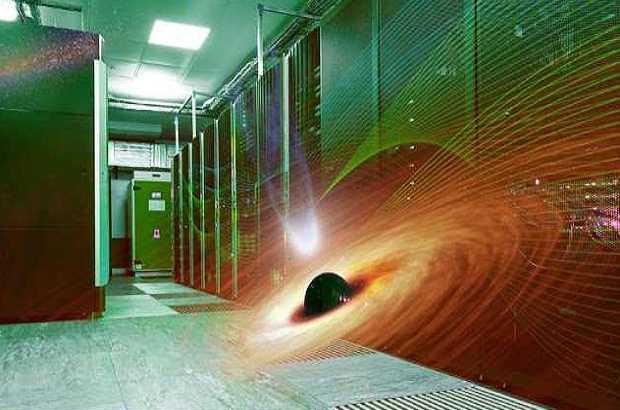
Supermassive black holes and supercomputers Researchers use supercomputers to understand and predict signs of black holes  New 3D simulations on powerful supercomputers help predict the formation of growth disks and relative jets, which are sized by the strong gravitational forces of the black holes and the strong magnetic forces they generate. Supermassive black holes In … Read more

Nobel Prize 2018 winners: See who has been honored in Chemistry?

In 2018, the Nobel Prize in Chemistry honored groundbreaking work in molecular evolution. Frances H. Arnold received half the prize for her pioneering research on the directed evolution of enzymes. The other half was jointly awarded to George P. Smith and Sir Gregory P. Winter for developing phage display techniques to evolve peptides and antibodies. … Read more

Engineering plants for a sustainable development

Engineering Plants
Engineering plants for a sustainable development

Engineering plants for a sustainable development

The building blocks of life

Plants produce walls on a daily basis and these walls support many important aspects of life. Plants can help us manufacture a greener future, and thanks to advances In genomics Researchers are starting to understand them better than ever before. Their discovery will help the plants to produce new types of cell walls, providing for an exciting future in sustainable materials. Each and every plant cell surrounds itself with wall structures, also known as cell walls. These are building blocks for food fuels and materials. In the discovery of durable materials, day-to-day structures of plants can help to change pollution and plastic with ones that are less detrimental to our environment.   As scientists, we take considerable time and effort to understand them for the purpose of being able to manipulate their content and structures. If they can replace a wall for a wall or maybe the mixture properties of two wall types will be very easy to remove sugars. To understand how to control the production of flexible primary walls that support cell development has been an important goal for the biologist.

In these walls, the sugar-based polymers could be used for the range of applications—like providing or developing new types of green nanomaterial for converting them into biofuels; However, the content of plants includes secondary walls which are attached to wood. These structures have different features compared to the primary walls and are very difficult to tease individually. It is easier compared to being made in the form of the arsenal of protein activities, contributes to two wall structures. A possible way around this problem is to find a way to turn on the genes that control the whole program of one or the other wall type.


Master switches

In a new study, Researchers have identified ‘master switches’ that can turn on primary wall production. They have identified these master switches by expressing a large selection of something called transcription factors, which are proteins that can turn on the activity of other genes, in woody fiber cells of plants. Astonishingly, these switches can make cells producing Thick primary walls that can even be used to replace secondary walls. By driving the Activity of the transcription factors only In the woody fiber cells, they could then screen for those plants that Restored a Thick wall structure around the cells. They have assessed those plants chemically and found some that produced Thick walls but with primary wall-like features. Indeed, these walls were more similar to Thick primary walls. While they are less strong than the typical secondary wall encased fiber cells, the number of sugars released from the substantially increased. The capacity to combine the ease of breaking primary wall sugar polymers apart, with the secondary walls’ ability to grow thickly, means they can potentially completely change the content of the biomass of plants, from something that is strong but difficult to break apart to something that is more plastic and easy to dissolve. The crux here was to use plants that are not Able to produce woody secondary walls as their starting material. To do this, they used plants from the Mitsuda lab at the National Institute for Advanced Industrial Science and Technology in Japan that had been modified so they could no longer make these sturdy secondary

By combining the activity of these genetic master switches with different secondary wall transcription factors, they may be able to tailor-make and engineer the biomass of plants in the future—leading to plants that can easily release their sugars for green fuel production or for new types of materials.  The Crux was to use those plants which are not capable of generating woody secondary walls as their initial material. In order to do this,  they used plants from the Mitsuda lab at the National Institute for Advanced Industrial Science and Technology in Japan which was modified from the Mitsuda lab, so that they could combine the activity of these genetic master switches with different secondary transcription factors They cannot make strong secondary schools in the future to create and engineer biomass plants. Can be used are not likely to be able to lead out of the plant’s green fuel production can easily release their sugars or in the electronic and medical fields to these materials and may use the computer components beat Nanomaterials.
These materials could, for example, be used in the electronic and medical sectors, and perhaps for computer components like green nanomaterials. They may even have the potential to become an alternative to plastics, in some settings.

Read more