Speeding Up Quantum Computing Using Giant Atomic Ions
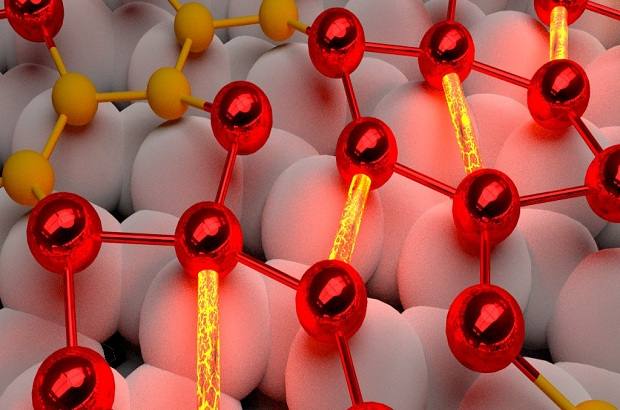
Researchers have implicated ion quantum computing using giant atomic ions (Rydberg ions) and discovered a new way to speed up quantum computing that can pave the way for the massive leap forward in computer processing power. Researchers have discovered a new way to speed up quantum computing that can pave the way for the huge leap … Read more
How to Track the Secret Movement of Elusive Unobserved Quantum Particles

The researchers from Cambridge University have discovered a way to observe mysterious quantum particles even without directly observing them and they have demonstrated the ability to track uncontrolled or unobserved quantum particles instead of measuring the quantum body itself while testing how quantum objects interact with their environment. The researchers from Cambridge University have discovered … Read more

Importance of Laser Technology – What are Lasers Used for Today?

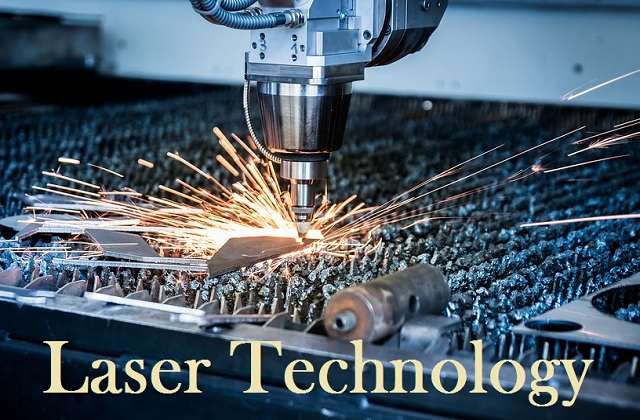
Laser technology is very important in the modern world because it is used in many fields.  The incredible uses of laser technology include: barcode scanners, laser printers, optical disk drives, cutting and welding materials, semiconducting chip manufacturing, law enforcement devices, and free-space optical communication. Lasers are also used in DNA sequencing instruments, surgery hair removal products … Read more

Supercomputing Helps Study Two-Dimensional Materials – Gauss Centre for Supercomputing

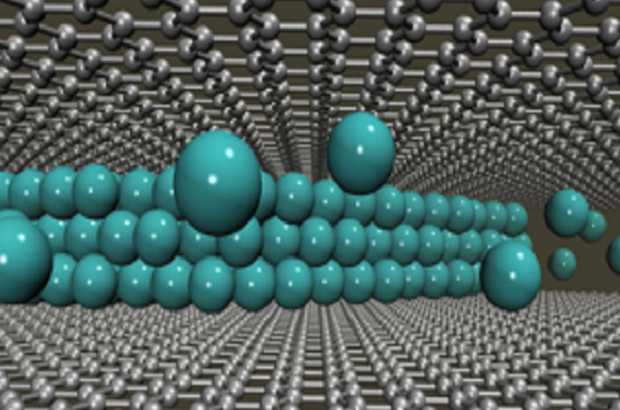
Supercomputing helps in studying two-dimensional materials. High-performance computing (HPC) helps material scientists study the properties of materials at the atomic scale and under extreme conditions and understand experiments to monitor the movement of lithium atoms in real-time in bi-layer graphene, paving the way to design new materials for batteries and other electronics. A multi-layer of … Read more

Quantum computing, Qubits and Quantum computers – Definition and Applications

Quantum computing is the direct use of specific quantum mechanical phenomena such as superposition and entanglement to store data, perform calculations and power exciting advances in various fields, from materials science to pharmaceuticals research. A quantum computer is a machine that works with particles that can be in a superposition and performs such calculations that … Read more

Supercomputing simulations and laser pulses to observe electron behavior during chemical reactions

Electron behavior during chemical reactions- Credit: Andreas Lücke Researchers use supercomputing simulations and laser pulses to monitor electron behavior during chemical reactions for the first time Using supercomputing simulations and laser pulses, researchers of the Fritz Haber Institute Berlin and the University of Paderborn have demonstrated their ability to observe movements of electrons during the chemical reaction. Researchers have long … Read more

The uses of laser technology in medical fields-How lasers cause a medical revolution?

Optical laser The uses of laser technology in medical fields-How lasers cause a medical revolution?  Introduction LASER (Light Amplification by Stimulated Emission of Radiation) is electromagnetic radiation whose photons are equal in frequency and waveform symmetry. The constructive interference between the wavelengths interacts with a high-energy photovoltaic pulse of time and with a very small … Read more

Nobel Prize in Physics 2018: Tools made of light, Optical tweezers and High-power laser pulses

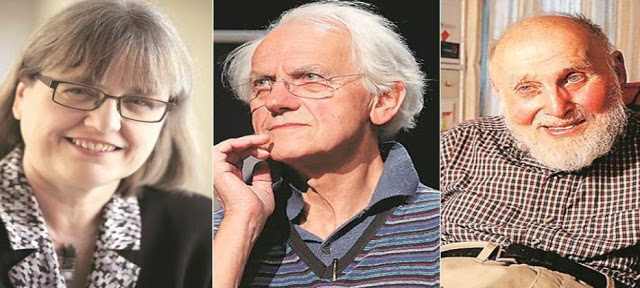
Nobel prize winners in physics 2018, From left: Donna Strickland, Gerard Mourou  and Arthur Ashkin Nobel Prize in Physics 2018: Tools made of light, ‘optical tweezers and high-power laser pulses The Nobel Prize 2018  in Physics was awarded to three scientists (Arthur Ashkin from the United States of America, Gerard Mourou from France and Donna Strickland … Read more

How Polymers Relax after Stressful Processing

There are many stress relaxation processes that can be classified into many forms. The most important stress relaxation mechanisms are viscous flow, disentanglement of physical cross-links (knots), molecular relaxation, chain scission, and bond interchange.  Here we will only uncover the viscous flow mechanism that is caused by the polymer chains that move from each other.  … Read more