





Is Coding a Fad? 8 Reasons Coding for Kids is Not Just Another Fad

Coding is not a fad; it’s a foundational skill for the future. It promotes creativity, critical thinking, and problem-solving, preparing kids for a tech-driven world. With endless applications, coding empowers innovation and shapes tomorrow’s leaders. Coding is basically the computer language used to develop software,  apps, and websites. Coding is a way of bridging the … Read more

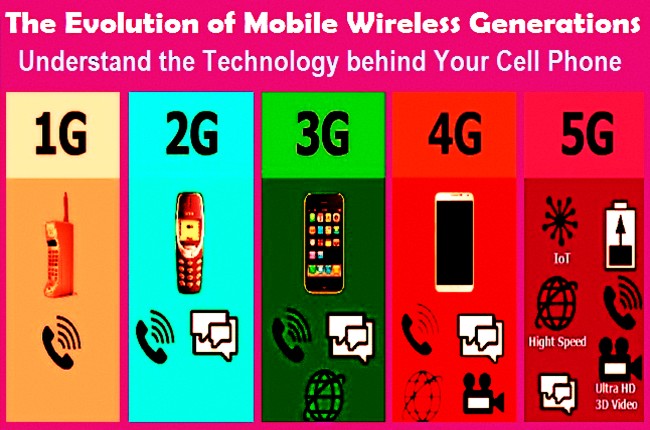
Evolution of Wireless Generations from 0G to 5G – Understand the Technology behind Your Cell Phone

The ability to communicate with people on the move has developed significantly. In the last few decades, mobile wireless technology has evolved from 0G to 1G, 2G, 3G, 4G, and 5G. 1G was an analog used only for voice calls. 2G is a digital technology and supports text messaging. 3G is a high-speed IP data … Read more

What is 5G Wireless Technology and How is 5G Network Different from 4G?

5G wireless technology is the latest communication technology for smartphones that was launched in April 2019. 5G networks are widely believed to be faster, smarter and more efficient than 4G networks. Cell towers equipped with 5G technology will have a capacity of over 4G / LTE. The 5G network will be available in most areas of the … Read more

Importance of Nanotechnology Education in Modern Society and Its Applications in Daily Life

Why is nanotechnology important in modern society and How nanotechnology is useful to us? Nanotechnology has a greater impact on our lives on a daily basis. It is intended to provide a novel and improved approach to cancer diagnosis and treatment.  Nanotechnology presents several biological processes and tools and also provides faster, smaller and more … Read more

Top 6 Technological Trends That Will Define the Future

The top six technological trends of 2021 that will define the future include the Internet of Things, virtual reality, machine learning, e-commerce technologies, metal 3D printing, and cognitive technologies. Latest technological trends that will shape the future  Top Six Technological Trends That Will Define the Future – Must Learn in 2021 Latest Technology Trends If … Read more

What is Cryptocurrency and How Does It Work?- Why Do We Use Cryptocurrencies?

A cryptocurrency is a decentralized digital currency, and an encrypted digital asset designed to work as a medium of exchange confirmed in a public ledger via a process known as mining and transferred between peers.The cryptocurrency uses strong cryptography to secure financial transactions, verify the transfer of assets and control the creation of additional units. … Read more

The Real World Applications of the Internet of Things | What is the Future of IoT Technology?

The Internet of Things (IoT) is a system of interrelated computing devices, and a modern digital technology that aims at attracting objects, sensors, and connecting them to the Internet to communicate data without human interference and perform specific functions through the network.  IoT technology is a sophisticated concept of the Internet so that all things in … Read more

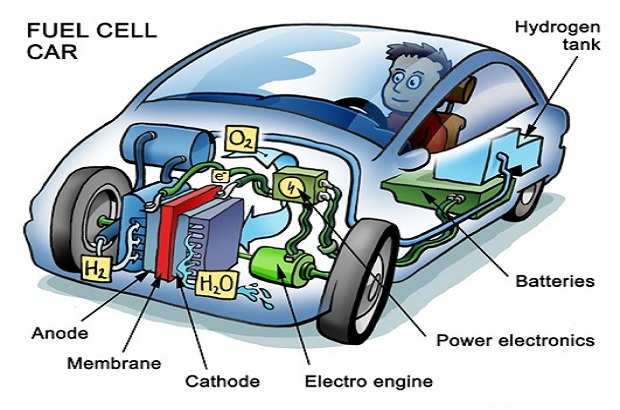
Fuel Cell Power Generation – How Hydrogen Fuel Cell Vehicles Work

Fuel cells are a junction between internal combustion engines and batteries. Fuel cell vehicles combine hydrogen and oxygen to produce electricity and use hydrogen gas to drive electric motors. Since fuel cell vehicles are entirely powered by electricity, they are considered electric vehicles, but there are some differences between electric vehicles and fuel cell vehicles. The range … Read more

Quantum computing, Qubits and Quantum computers – Definition and Applications

Quantum computing is the direct use of specific quantum mechanical phenomena such as superposition and entanglement to store data, perform calculations and power exciting advances in various fields, from materials science to pharmaceuticals research. A quantum computer is a machine that works with particles that can be in a superposition and performs such calculations that … Read more

Engineering plants for a sustainable development

Engineering Plants
Engineering plants for a sustainable development

Engineering plants for a sustainable development

The building blocks of life

Plants produce walls on a daily basis and these walls support many important aspects of life. Plants can help us manufacture a greener future, and thanks to advances In genomics Researchers are starting to understand them better than ever before. Their discovery will help the plants to produce new types of cell walls, providing for an exciting future in sustainable materials. Each and every plant cell surrounds itself with wall structures, also known as cell walls. These are building blocks for food fuels and materials. In the discovery of durable materials, day-to-day structures of plants can help to change pollution and plastic with ones that are less detrimental to our environment.   As scientists, we take considerable time and effort to understand them for the purpose of being able to manipulate their content and structures. If they can replace a wall for a wall or maybe the mixture properties of two wall types will be very easy to remove sugars. To understand how to control the production of flexible primary walls that support cell development has been an important goal for the biologist.

In these walls, the sugar-based polymers could be used for the range of applications—like providing or developing new types of green nanomaterial for converting them into biofuels; However, the content of plants includes secondary walls which are attached to wood. These structures have different features compared to the primary walls and are very difficult to tease individually. It is easier compared to being made in the form of the arsenal of protein activities, contributes to two wall structures. A possible way around this problem is to find a way to turn on the genes that control the whole program of one or the other wall type.


Master switches

In a new study, Researchers have identified ‘master switches’ that can turn on primary wall production. They have identified these master switches by expressing a large selection of something called transcription factors, which are proteins that can turn on the activity of other genes, in woody fiber cells of plants. Astonishingly, these switches can make cells producing Thick primary walls that can even be used to replace secondary walls. By driving the Activity of the transcription factors only In the woody fiber cells, they could then screen for those plants that Restored a Thick wall structure around the cells. They have assessed those plants chemically and found some that produced Thick walls but with primary wall-like features. Indeed, these walls were more similar to Thick primary walls. While they are less strong than the typical secondary wall encased fiber cells, the number of sugars released from the substantially increased. The capacity to combine the ease of breaking primary wall sugar polymers apart, with the secondary walls’ ability to grow thickly, means they can potentially completely change the content of the biomass of plants, from something that is strong but difficult to break apart to something that is more plastic and easy to dissolve. The crux here was to use plants that are not Able to produce woody secondary walls as their starting material. To do this, they used plants from the Mitsuda lab at the National Institute for Advanced Industrial Science and Technology in Japan that had been modified so they could no longer make these sturdy secondary

By combining the activity of these genetic master switches with different secondary wall transcription factors, they may be able to tailor-make and engineer the biomass of plants in the future—leading to plants that can easily release their sugars for green fuel production or for new types of materials.  The Crux was to use those plants which are not capable of generating woody secondary walls as their initial material. In order to do this,  they used plants from the Mitsuda lab at the National Institute for Advanced Industrial Science and Technology in Japan which was modified from the Mitsuda lab, so that they could combine the activity of these genetic master switches with different secondary transcription factors They cannot make strong secondary schools in the future to create and engineer biomass plants. Can be used are not likely to be able to lead out of the plant’s green fuel production can easily release their sugars or in the electronic and medical fields to these materials and may use the computer components beat Nanomaterials.
These materials could, for example, be used in the electronic and medical sectors, and perhaps for computer components like green nanomaterials. They may even have the potential to become an alternative to plastics, in some settings.

Read more