Why Should You Read Every Day: Scientific Benefits of Reading Books

Reading books daily is very important to you because it helps to expand your mind and give you more ideas. Reading has both physical and mental health benefits and these benefits can last for a lifetime. Scientific Benefits of Reading Books Why Should You Read Every Day? Reading literally changes your mind. It is for the … Read more
What Happens to Your Brain When You Read?

Your brains change and evolve in some fascinating ways when you read. The left occipitotemporal cortex of the brain instantly associates each written word with its spoken equivalent. One part of the brain analyzes the meaning of a word, while another part allows it to recognize words automatically. Know more about what happens to our brain when … Read more

Importance of Stories in Our Lives: How Storytelling Affects the Brain?

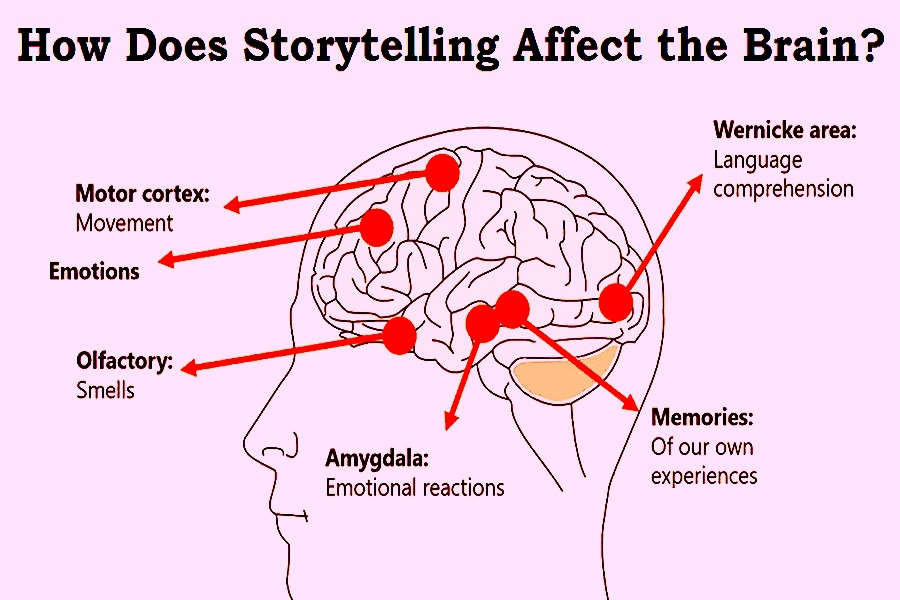
How Do Stories Change Your Brain? Storytelling is an essential part of being human. Stories stimulate the brain and change the way we act in our lives. The stories motivate you to work with others, make you more empathic, compassionate, and generous, and positively influence your social behavior.  Stories shape your brains, activate the auditory … Read more

Common Issues Related to Lack of Concentration

Having trouble focusing is a common and periodic phenomenon for most people. Lack of attention not only affects your performance in work, school, relationships and daily activities, but it also affects how you act like humans and how you see the world. Here we will discuss the most common complications related to lack of concentration. … Read more

The Assessment and Rehabilitation of Attention Functions

Attention is an important component of cognitive functions.  The Test of Everyday Attention (TEA) is designed to measure attention in adults between 18 and 80 years old. In this article, we will discuss how can we assess and rehabilitate attention functions. How can we assess and rehabilitate attention functions? Neuropsychological Assessment and Cognitive rehabilitation for Attention Functions … Read more

How Can You Diagnose Concentration Problems?

The diagnosis of concentration problems requires a careful review of symptoms. The diagnosis of attention problems requires a careful review of symptoms. How Can You Diagnose Attention Problems? The Diagnosis of Concentration Problems The diagnosis will be carried out in accordance with international standards, including the registration of behavioral history, the difficulties you face (clinical … Read more

Schizophrenia – Symptoms, Causes and Complications – Schizophrenia Infographic

Schizophrenia is a mental or psychotic illness that usually appears in early adulthood or late adolescence.  Schizophrenia is characterized by hallucinations, delusions, disorganized speech, extremely disordered thinking, and behavior and other cognitive difficulties. People with schizophrenia act abnormally and interpret reality unnaturally. Schizophrenia Symptoms and causes Schizophrenia -Symptoms, Causes and Complications – Schizophrenia Infographic What is … Read more

What is Consciousness in Cognitive Psychology? – Types and Limits of Human Consciousness

What is consciousness in psychology?Consciousness is the mental awareness of internal or external existence in which the human mind has the ability to communicate easily and directly with itself, and with the people around it, using the five senses it owns.In cognitive psychology, consciousness is defined as our subjective awareness of our unique thoughts, feelings, … Read more

10 Key Facts about Learning Disabilities – How to Deal with Learning Disorders

Learning disabilities (LD) are conditions that may affect a child’s ability to learn, understand, and memorize. Learning disabilities affect a good percentage of children.  If your child has a learning disability, please remember that he is not mentally unstable! He just needs a different approach to learning.  A child with a learning disability usually works differently … Read more

10 Key Facts about ADHD – Relationship Between ADHD and Learning Disabilities – ADHD Infographics

The relationship between ADHD and learning disabilities (LD). Attention deficit hyperactivity disorder (ADHD) is not considered a learning disability; however, ADHD makes the learning process difficult.  You can have both ADHD and learning disabilities. ADHD and LD often coexist.  45 to 50% of children and adolescents with ADHD also have some type of learning disabilities … Read more