Obsessive-compulsive disorder (OCD) is a type of mental illness
that affects one’s behavior and thinking.
Obsessive-compulsive disorder (OCD)
is a chronic disease of the nervous system and is a common psychological problem associated with anxiety in which a person has unwanted and
uncontrollable thoughts, reoccurring ideas, excessive sensations, (obsessions)
that make him feel motivated to do something repeatedly (compulsions).
OCD is
characterized by both obsessive and compulsive symptoms.
People
with OCD may have symptoms of obsession, signs of compulsion or both.
that affects one’s behavior and thinking.
Obsessive-compulsive disorder (OCD)
is a chronic disease of the nervous system and is a common psychological problem associated with anxiety in which a person has unwanted and
uncontrollable thoughts, reoccurring ideas, excessive sensations, (obsessions)
that make him feel motivated to do something repeatedly (compulsions).
OCD is
characterized by both obsessive and compulsive symptoms.
People
with OCD may have symptoms of obsession, signs of compulsion or both.
 |
|
Obsessive-compulsive disorder (OCD) is characterized
by excessive thoughts and unreasonable fears (obsessions) that lead to repetitive behaviors (compulsions). |
Obsessive-Compulsive
Disorder (OCD): Symptoms, Causes,
Diagnosis and Treatment
What is Obsessive-Compulsive
Disorder (OCD)?
Obsessive-compulsive
disorder (OCD) is a type of chronic disorder and the common psychological problem associated with
anxiety, characterized by irrational thoughts and fears where the patient
feels the urgent need to do certain behaviors repeatedly and compulsively out
of control and will.
disorder (OCD) is a type of chronic disorder and the common psychological problem associated with
anxiety, characterized by irrational thoughts and fears where the patient
feels the urgent need to do certain behaviors repeatedly and compulsively out
of control and will.
People with
obsessive-compulsive disorder are sometimes aware of the fact that their
obsessive behavior is illogical and try to ignore or change, but these attempts
increase the intensity of distress and anxiety more.
obsessive-compulsive disorder are sometimes aware of the fact that their
obsessive behavior is illogical and try to ignore or change, but these attempts
increase the intensity of distress and anxiety more.
In the final
analysis, compulsive behaviors are mandatory to relieve distress.
analysis, compulsive behaviors are mandatory to relieve distress.
Obsessive-compulsive
disorder may often be concentrated on a particular subject, such as fear of bacterial infection.
disorder may often be concentrated on a particular subject, such as fear of bacterial infection.
Some people
with obsessive-compulsive disorder, for example, wash their hands so
compulsively that they cause wounds and scars.
with obsessive-compulsive disorder, for example, wash their hands so
compulsively that they cause wounds and scars.
Despite
attempts and efforts, obsessive-compulsive thoughts are repeated and continue
to cause distress and discomfort and may lead to repetitive and
ritualistic behavior, a cruel and painful episode that characterizes the
obsessive-compulsive disorder.
attempts and efforts, obsessive-compulsive thoughts are repeated and continue
to cause distress and discomfort and may lead to repetitive and
ritualistic behavior, a cruel and painful episode that characterizes the
obsessive-compulsive disorder.
(adsbygoogle = window.adsbygoogle || []).push({});
Symptoms
of Obsessive-Compulsive Disorder
Obsessive-compulsive disorder (OCD) is characterized by both obsessive and compulsive symptoms.
This means that people with OCD can have symptoms of obsession, signs of
compulsion or both.
compulsion or both.
These symptoms and signs can hinder all aspects of life, such as school,
work, and personal relationships.
work, and personal relationships.
Obsessive Symptoms
Obsessive symptoms are frequently repeated, stubborn, involuntary, or
spontaneous motives and intangible intentions that are
illogical.
spontaneous motives and intangible intentions that are
illogical.
These obsessions are usually troublesome and narrow when trying to
direct thoughts to other things or to do other things.
direct thoughts to other things or to do other things.
In general, these obsessions revolve around a specific theme, such as:
1. Fear of dirt or pollution.
2. Excessive need for arrangement and requirement of system and symmetry.
3. Unusual Offensive Wishes or aggressive desires.
4. Thoughts or fantasies about sex.
Symptoms related to the obsessive disorder include:
5. Fear of infection as a result of shaking hands with others, or
touching objects touched by others.
touching objects touched by others.
6. Doubt about door locking or oven closing.
7. Ideas about causing harm to others in road accidents or fear of being
harmed by others.
harmed by others.
8. Critical crisis or severe distress in those cases where the objects
are not properly arranged or are not moving in the right direction.
are not properly arranged or are not moving in the right direction.
9. Imaginations about harming children (children of the imaginative
person).
person).
10. The desire to shout in inappropriate cases.
11. Avoid circumstances and refrain from situations that can cause
obsession, like handshaking.
obsession, like handshaking.
12. Recurrent fantasies of pornographic images.
13. Swelling of the skin by washing hands at a high rate.
14. Skin scars due to excessive treatment.
15. Hair loss, or localized baldness, as a result of hair fall.
Compulsive symptoms
Compulsive symptoms are frequent behaviors, which are repeated as a
result of uncontrollable desires and impulses.
result of uncontrollable desires and impulses.
These repetitive behaviors are supposed to alleviate the anxiety or
distress associated with obsessive-compulsive disorder.
distress associated with obsessive-compulsive disorder.
For example, people who think that they have escaped someone else, they
go back to the scene, because they cannot get rid of suspicion and doubts.
go back to the scene, because they cannot get rid of suspicion and doubts.
Sometimes they can invent laws and rituals that can help in controlling
anxiety caused by meditative ideas.
anxiety caused by meditative ideas.
Like obsessive behavior, the compulsive disorder is generally associated
with a specific subject, such as:
with a specific subject, such as:
1. Bathing and cleaning repeatedly.
2. The need for reinforcements.
3. Go back to a particular job several times.
Symptoms associated with compulsive behavior include:
4. Washing hands until the skin flakes.
5. Check the doors frequently to
make sure they are locked.
make sure they are locked.
6. Checking the oven repeatedly to make sure it is off.
7. Counting and calculation with certain patterns.
(adsbygoogle = window.adsbygoogle || []).push({});
Causes of Obsessive-Compulsive Disorder
Although there is a lot of research on obsessive-compulsive disorder,
the exact causes of it have not been identified.
the exact causes of it have not been identified.
It is noteworthy that there is a belief that the injured brains work
differently than normal, and that the imbalance in the neurotransmitters is
related to the disease.
differently than normal, and that the imbalance in the neurotransmitters is
related to the disease.
There are some central theories about the possible causative factors of
excessive compulsive disorder that include:
excessive compulsive disorder that include:
Risk factors for OCD
Biological factors: There is some evidence to suggest that
obsessive-compulsive disorder is the result of a chemical change occurring in
the person’s body or in the performance of his brain.
obsessive-compulsive disorder is the result of a chemical change occurring in
the person’s body or in the performance of his brain.
There is also evidence that obsessive-compulsive disorder may also be
associated with certain genetic factors, but the genes responsible for the
obsessive-compulsive disorder have not yet been identified and diagnosed.
associated with certain genetic factors, but the genes responsible for the
obsessive-compulsive disorder have not yet been identified and diagnosed.
Environmental factors: Some researchers believe the
obsessive-compulsive disorder is caused by habits and behaviors acquired over
time.
obsessive-compulsive disorder is caused by habits and behaviors acquired over
time.
Insufficient Serotonin: Serotonin is one of the
chemicals necessary for brain function.
chemicals necessary for brain function.
If the level of serotonin is
insufficient and very low, it is likely that this will contribute to the
development of the obsessive-compulsive disorder.
insufficient and very low, it is likely that this will contribute to the
development of the obsessive-compulsive disorder.
Some studies that compare the images of OCD people with non-infected
people have shown differences in brain function in both cases.
people have shown differences in brain function in both cases.
Moreover, the symptoms of the obsessive-compulsive disorder have
diminished in people with OCD and are taking serotonin-enhancing medicines.
diminished in people with OCD and are taking serotonin-enhancing medicines.
Streptococcal
infection in the throat: There is research suggesting that obsessive-compulsive disorder has
been developed in children and teens after a sore throat or strep throat which is a
bacterial infection in the larynx caused by the
Group-A Streptococcus bacteria.
infection in the throat: There is research suggesting that obsessive-compulsive disorder has
been developed in children and teens after a sore throat or strep throat which is a
bacterial infection in the larynx caused by the
Group-A Streptococcus bacteria.
But the opinion about the reliability and credibility of this
research has been divided and it should be reinforced with further evidence
until it is recognized that Streptococcus in the throat can actually cause an
obsessive-compulsive disorder.
research has been divided and it should be reinforced with further evidence
until it is recognized that Streptococcus in the throat can actually cause an
obsessive-compulsive disorder.
There are
other factors that may increase the risk of developing, or provoking
obsessive-compulsive disorder (OCD):
other factors that may increase the risk of developing, or provoking
obsessive-compulsive disorder (OCD):
- Family
History - Life is
overloaded with stress and pressure - Pregnancy
It was
previously thought that obsessive-compulsive disorder was a rare disease, but
it is now known that OCD is more prevalent than many other psychiatric illnesses.
previously thought that obsessive-compulsive disorder was a rare disease, but
it is now known that OCD is more prevalent than many other psychiatric illnesses.
Obsessive-compulsive
disorder often begins at an early age, in childhood or adolescence, and
generally at the age of ten.
disorder often begins at an early age, in childhood or adolescence, and
generally at the age of ten.
In adults,
it usually appears at approximately 21 years of age.
it usually appears at approximately 21 years of age.
(adsbygoogle = window.adsbygoogle || []).push({});
Complications
of Obsessive-Compulsive Disorder
Complications
that may result from Obsessive Compulsive Disorder, or that may be associated
with it, include:
that may result from Obsessive Compulsive Disorder, or that may be associated
with it, include:
- Suicidal thoughts and acts
accordingly. - Addiction to alcohol and other
substances. - Another
disorder related to depression and anxiety. - Eating
Disorders. - Contact
dermatitis as a result of handwashing at a high rate. - Lack of
ability to work or learn. - Problematic
social relations.
Diagnosis of Obsessive-Compulsive Disorder
When a
doctor or psychiatrist suspects that someone is suffering from OCD, then he
performs a series of medical tests and psychological examinations.
doctor or psychiatrist suspects that someone is suffering from OCD, then he
performs a series of medical tests and psychological examinations.
These tests
help in the diagnosis of obsessive-compulsive disorder, by denying (exclusion)
of other medical conditions that can lead to similar symptoms, and help in
finding additional complications related to OCD. These include:
help in the diagnosis of obsessive-compulsive disorder, by denying (exclusion)
of other medical conditions that can lead to similar symptoms, and help in
finding additional complications related to OCD. These include:
- Physical test
- Laboratory
tests - Psychological assessment
The criteria
for the diagnosis of obsessive-compulsive disorder are:
for the diagnosis of obsessive-compulsive disorder are:
The person
to be tested acts mandatory, compulsively and inevitably under the examination
to be tested acts mandatory, compulsively and inevitably under the examination
The person
who comes under the examination observes that his behavior is unclear,
obsessive, compulsive, exaggerated or irrational.
who comes under the examination observes that his behavior is unclear,
obsessive, compulsive, exaggerated or irrational.
Obsessive or
compulsive behavior adversely affects daily routine.
compulsive behavior adversely affects daily routine.
(adsbygoogle = window.adsbygoogle || []).push({});
Obsessive
behavior must meet the following criteria:
behavior must meet the following criteria:
Frequent
thoughts, desires, motivations or fearsome fantasies cause distress.
thoughts, desires, motivations or fearsome fantasies cause distress.
Ideas are
not just exaggerated concerns about real-life problems.
not just exaggerated concerns about real-life problems.
The examiner
tries to ignore or deny ideas, fantasies, and desires.
tries to ignore or deny ideas, fantasies, and desires.
The person
under examination knows that ideas, fantasies, and desires are the fabric of
his imagination.
under examination knows that ideas, fantasies, and desires are the fabric of
his imagination.
Compulsive
behavior must meet the following criteria:
behavior must meet the following criteria:
Doing
certain actions frequently and involuntarily, such as washing hands or counting
whispers.
certain actions frequently and involuntarily, such as washing hands or counting
whispers.
The goal of
compulsive behavior is to prevent or reduce the distress caused by unrealistic
whispers.
compulsive behavior is to prevent or reduce the distress caused by unrealistic
whispers.
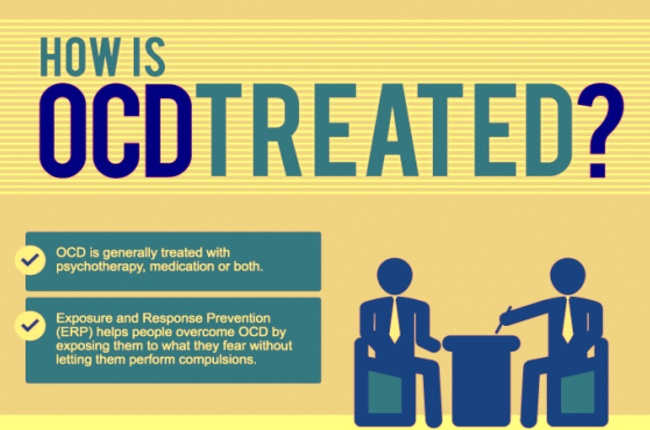
How is OCD Treated?
 |
|
Treatment of obsessive
compulsive disorder (OCD) includes talk therapy, cognitive behavior therapy drug therapy. |
Treatment of Obsessive-Compulsive Disorder
Treatment of
the obsessive-compulsive disorder is a complex process and is not guaranteed to
be effective and successful in all cases.
the obsessive-compulsive disorder is a complex process and is not guaranteed to
be effective and successful in all cases.
In some
cases, continuous, lifelong treatment may be needed. However, the treatment of
OCD can be helpful in supporting the patient to deal with the symptoms,
confront them and prevent them from controlling his life.
cases, continuous, lifelong treatment may be needed. However, the treatment of
OCD can be helpful in supporting the patient to deal with the symptoms,
confront them and prevent them from controlling his life.
Key points
There are
two basic types of treatment for obsessive-compulsive disorder:
two basic types of treatment for obsessive-compulsive disorder:
- Psychotherapy
- Pharmacotherapy
The best and
most effective treatment for OC D varies according to the patient, his personal
situation and preferences, and often the combination of psychotherapy and
pharmacotherapy is very effective.
most effective treatment for OC D varies according to the patient, his personal
situation and preferences, and often the combination of psychotherapy and
pharmacotherapy is very effective.
Psychotherapy for Obsessive-Compulsive
Disorder
The
so-called therapeutic method Cognitive Behavioral Therapy (CBT)
was found to be the most effective treatment of the obsessive-compulsive
disorder, both among children and adults.
so-called therapeutic method Cognitive Behavioral Therapy (CBT)
was found to be the most effective treatment of the obsessive-compulsive
disorder, both among children and adults.
Pharmacotherapy for Obsessive-Compulsive Disorder
Certain
medications for the treatment of mental illness can help control
the obsessive-compulsive behaviors that characterize OCD.
medications for the treatment of mental illness can help control
the obsessive-compulsive behaviors that characterize OCD.
The
treatment of OCD begins with antidepressants that may be useful in the
treatment of OCD because it increases serotonin levels, which may be low in
people with obsessive-compulsive disorder.
treatment of OCD begins with antidepressants that may be useful in the
treatment of OCD because it increases serotonin levels, which may be low in
people with obsessive-compulsive disorder.
Antidepressants
approved by the US Food and Drug Administration (FDA) in the treatment of OCD
include:
approved by the US Food and Drug Administration (FDA) in the treatment of OCD
include:
- Clomipramine
- Fluvoxamine
- Fluoxetine
(Prozac) - Paroxetine
(Paxil) - Sertraline
(Zoloft)
(adsbygoogle = window.adsbygoogle || []).push({});
Side effects and potential risks of
medications
All
psychiatric drugs have side effects and potential health risks. The
psychologist should be informed of all the emerging side effects and symptoms
and consulted regarding the monitoring and follow-up measures to be taken
during the use of psychotropic drugs, specifically: antipsychotic drugs.
psychiatric drugs have side effects and potential health risks. The
psychologist should be informed of all the emerging side effects and symptoms
and consulted regarding the monitoring and follow-up measures to be taken
during the use of psychotropic drugs, specifically: antipsychotic drugs.
Biting drugs
may cause serious reactions when taken together with other medications, certain
foods or other substances.
may cause serious reactions when taken together with other medications, certain
foods or other substances.
You should
inform your doctor of all non-prescription medications and preparations,
including vitamins, salts, and medicinal herbs.
inform your doctor of all non-prescription medications and preparations,
including vitamins, salts, and medicinal herbs.
Other ways of treating obsessive-compulsive
disorder
Sometimes,
medications and/or psychotherapy may not be effective enough to treat the
symptoms of OCD.
medications and/or psychotherapy may not be effective enough to treat the
symptoms of OCD.
In some rare
cases, other methods of treatment for OCD are used, including:
cases, other methods of treatment for OCD are used, including:
Electroconvulsive
therapy (ECT): also
called electroshock therapy or simply “shock therapy”. It is a psychological
way of treatment.
therapy (ECT): also
called electroshock therapy or simply “shock therapy”. It is a psychological
way of treatment.
In this
technique, electrical impulses or electrical seizures are induced in a
patient’s body or brain to provide relief from
psychological problems and mental disorders such as obsessive-compulsive
disorder.
technique, electrical impulses or electrical seizures are induced in a
patient’s body or brain to provide relief from
psychological problems and mental disorders such as obsessive-compulsive
disorder.
Transcranial
Magnetic Stimulation (TMS): It is a non-invasive way of treatment used to stimulate the human
brain.
Magnetic Stimulation (TMS): It is a non-invasive way of treatment used to stimulate the human
brain.
In this
method, electric fields are produced by electromagnetic induction.
method, electric fields are produced by electromagnetic induction.
Subsequently,
they travel through the skull and scalp without any effort, making TMS a
non-invasive, painless, and easy way to stimulate the brain.
they travel through the skull and scalp without any effort, making TMS a
non-invasive, painless, and easy way to stimulate the brain.
Deep brain stimulation (DBS): It
is a neurosurgical procedure, in which neurotransmitter is implanted that
sends electrical impulses or seizures, to specific targets in the brain, through
implanted electrodes, for the treatment of
psychological or movement disorders.
is a neurosurgical procedure, in which neurotransmitter is implanted that
sends electrical impulses or seizures, to specific targets in the brain, through
implanted electrodes, for the treatment of
psychological or movement disorders.
Note: These methods have not been tested
primarily for the treatment of the obsessive-compulsive disorder, so be sure to
understand the pros and cons, and the risks, if any.
primarily for the treatment of the obsessive-compulsive disorder, so be sure to
understand the pros and cons, and the risks, if any.
(adsbygoogle = window.adsbygoogle || []).push({});