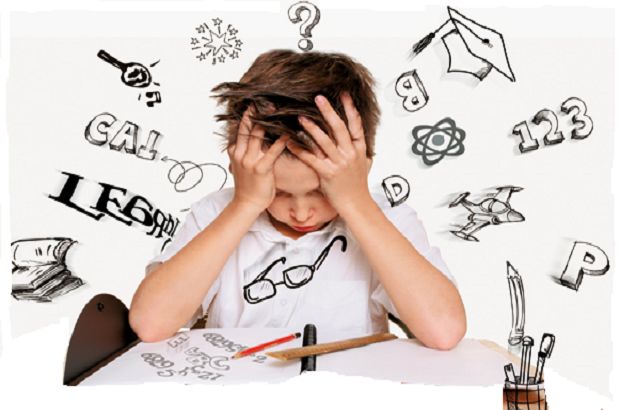
Learning disabilities, also called learning disorders, are
neurologically-based processing problems that can affect a person’s ability to
process information and interfere with cognitive skills or learning basic
skills such as reading, writing and/or math.
These processing problems can also
interfere with higher-level skills such as abstract reasoning, time planning,
organization, long or short term memory,
and attention.
A learning disability is not considered an intellectual
disability.
neurologically-based processing problems that can affect a person’s ability to
process information and interfere with cognitive skills or learning basic
skills such as reading, writing and/or math.
These processing problems can also
interfere with higher-level skills such as abstract reasoning, time planning,
organization, long or short term memory,
and attention.
A learning disability is not considered an intellectual
disability.
 |
| Learning Disabilities -Types of learning disabilities and Psychological implication of LD |
Learning Disabilities:
The Behavioral and Emotional Disorders | Specific Types of Learning
Disabilities and Psychological Implication
Learning
Disabilities (LD)
Learning disabilities (LD) are
problems in neural processing. These problems can interfere with basic learning
skills such as reading, writing, and/or math. They can also interfere with
top-level skills such as time planning, abstract thinking, organization, short
or long-term memory, and attention.
It is important to recognize that learning disabilities could impact an
individual’s life outside of academics and can affect relationships with
friends, family members and in the workplace.
problems in neural processing. These problems can interfere with basic learning
skills such as reading, writing, and/or math. They can also interfere with
top-level skills such as time planning, abstract thinking, organization, short
or long-term memory, and attention.
It is important to recognize that learning disabilities could impact an
individual’s life outside of academics and can affect relationships with
friends, family members and in the workplace.
The concept of learning disabilities
refers to the extent of the problems and difficulties faced by individuals in
their early stages of learning.
The child’s abnormal behavior is observed in
one of his mental skills: thinking, concentration, and meditation, reading, and
writing, spelling.
It also includes problems of senses in speech hearing and
sightseeing, but it is not limited and there is a lack of capabilities in the
field of mathematical operations and numerology.
It also includes children with
special needs who are concerned with mental problems as
well as psychologically and emotionally disturbed. These problems are the main
reason behind learning disabilities.
refers to the extent of the problems and difficulties faced by individuals in
their early stages of learning.
The child’s abnormal behavior is observed in
one of his mental skills: thinking, concentration, and meditation, reading, and
writing, spelling.
It also includes problems of senses in speech hearing and
sightseeing, but it is not limited and there is a lack of capabilities in the
field of mathematical operations and numerology.
It also includes children with
special needs who are concerned with mental problems as
well as psychologically and emotionally disturbed. These problems are the main
reason behind learning disabilities.
There is no need to be
confused with learning disabilities and learning problems. Learning problems
are primarily caused by visual, auditory or motor handicaps; of emotional distress; of
intellectual disability; or of cultural,
environmental, or economic disadvantages.
confused with learning disabilities and learning problems. Learning problems
are primarily caused by visual, auditory or motor handicaps; of emotional distress; of
intellectual disability; or of cultural,
environmental, or economic disadvantages.
(adsbygoogle = window.adsbygoogle || []).push({});
Patterns of
Learning Disabilities
The learning disabilities have been
adopted by experts from this field around the world after the general
recognition of their existence and the importance of research in the field of
education, there are two main types:
adopted by experts from this field around the world after the general
recognition of their existence and the importance of research in the field of
education, there are two main types:
Developmental Learning
Disabilities
This refers to the difficulties
associated with brain processes, including mental functions, the ability to
remember and recall information and other cognitive functions that a child
needs to learn in his early learning stages and is closely related to the extent of his or her academic achievement.
The reason for these difficulties is
that there are disorders in the central region of the nervous system, which
lead to a state of incomplete mental abilities responsible for the academic
compatibility of the learner and his personal, practical and social consensus.
These difficulties are in memory, attention, cognition, ability to deal with
problems, as well as in thinking of the child learner.
associated with brain processes, including mental functions, the ability to
remember and recall information and other cognitive functions that a child
needs to learn in his early learning stages and is closely related to the extent of his or her academic achievement.
The reason for these difficulties is
that there are disorders in the central region of the nervous system, which
lead to a state of incomplete mental abilities responsible for the academic
compatibility of the learner and his personal, practical and social consensus.
These difficulties are in memory, attention, cognition, ability to deal with
problems, as well as in thinking of the child learner.
Academic Learning
Disabilities
This type of difficulty
represents the challenges faced by the child in the skills that are relevant to
his scholastic, cognitive and academic performance, which control his
collection and decrease means that he has a low level.
These skills include
spelling, pronunciation, reading, writing, the capability to express and the
ability to understand processes.
These difficulties are considered to be
the result of the first type of developmental learning disabilities.
Read more: Learning Disorders: Symptoms, Causes and Treatment
represents the challenges faced by the child in the skills that are relevant to
his scholastic, cognitive and academic performance, which control his
collection and decrease means that he has a low level.
These skills include
spelling, pronunciation, reading, writing, the capability to express and the
ability to understand processes.
These difficulties are considered to be
the result of the first type of developmental learning disabilities.
Read more: Learning Disorders: Symptoms, Causes and Treatment
Specific Types of Learning
Disabilities
Auditory Processing
Disorder (APD)
This is a stage that adversely affects how
sounds that travel unimpeded through the ear are processed or interpreted by
the brain.
People with Auditory Processing Disorder (APD)
do not recognize the subtle differences between the sounds in words, even when
the sounds are loud and clearly heard.
They can also make it difficult to tell
where the sounds are coming from, to understand the order of sounds, or to
block the competition for background noises.
sounds that travel unimpeded through the ear are processed or interpreted by
the brain.
People with Auditory Processing Disorder (APD)
do not recognize the subtle differences between the sounds in words, even when
the sounds are loud and clearly heard.
They can also make it difficult to tell
where the sounds are coming from, to understand the order of sounds, or to
block the competition for background noises.
Language Processing
Disorder (LPD)
This is a specific type of auditory
processing disorder (APD), which has difficulty in applying to mean to sound
groups that makeup words, sentences, and stories.
While auditory processing
disorder (APD) impacts the interpretation of all the sounds in the brain, a language processing disorder (LPD)
is only related to language processing and can affect receptive language and
/or expressive language.
processing disorder (APD), which has difficulty in applying to mean to sound
groups that makeup words, sentences, and stories.
While auditory processing
disorder (APD) impacts the interpretation of all the sounds in the brain, a language processing disorder (LPD)
is only related to language processing and can affect receptive language and
/or expressive language.
Dyslexia
The difficulty of reading (dyslexia) is a person’s inability
to read properly, namely the very slow reading and writing as a result of
inaccuracies, and the difficulties in spelling words and sentences, as well as
in understanding the meaning of words and sentences.
The severity can vary in
everyone but can impact reading comprehension, reading fluency, recalling,
decoding, spelling, writing, and sometimes affect speech and maybe
present with other related disorders.
to read properly, namely the very slow reading and writing as a result of
inaccuracies, and the difficulties in spelling words and sentences, as well as
in understanding the meaning of words and sentences.
The severity can vary in
everyone but can impact reading comprehension, reading fluency, recalling,
decoding, spelling, writing, and sometimes affect speech and maybe
present with other related disorders.
Dysgraphia
The difficulty of writing (dysgraphia) is the person’s
inability to write and even just think about it.
Dysgraphia affects the
handwriting ability of a person and fine motor skills. These disabilities may
include poor spatial planning on paper, inconsistent spacing, illegible handwriting,
poor spelling.
There is also difficulty in thinking and writing as well as
composing writing at the same time.
inability to write and even just think about it.
Dysgraphia affects the
handwriting ability of a person and fine motor skills. These disabilities may
include poor spatial planning on paper, inconsistent spacing, illegible handwriting,
poor spelling.
There is also difficulty in thinking and writing as well as
composing writing at the same time.
Dyscalculia
The difficulty of the calculation (dyscalculia): In this stage, it is
very difficult to calculate something, due to lack of know-how and knowledge of
number relations, and difficulty in the auditory or visual sense of numbers.
Dyscalculia affects the ability of a person to understand the number and learn
the facts of mathematics.
In this type of LD, there may be a poor comprehension
of mathematical symbols; there can be difficulty in remembering and organizing
numbers, difficulty in telling the time, or difficulty in counting.
very difficult to calculate something, due to lack of know-how and knowledge of
number relations, and difficulty in the auditory or visual sense of numbers.
Dyscalculia affects the ability of a person to understand the number and learn
the facts of mathematics.
In this type of LD, there may be a poor comprehension
of mathematical symbols; there can be difficulty in remembering and organizing
numbers, difficulty in telling the time, or difficulty in counting.
Dyspraxia
The difficulty of movement (dyspraxia) occurs as a result of
a lack of balance between the performance of the hand and look, thus the inability of the child to control the simple movements of writing and cutting
words, as well as running and jumping.
Dyspraxia is also defined by the difficulty
in muscle control which may lead to problems with speech, and language, movement, and coordination.
Although
it is generally not considered as a learning disability completely it is often
present with dyscalculia, dyslexia or attention deficit hyperactivity disorder
(ADHD).
a lack of balance between the performance of the hand and look, thus the inability of the child to control the simple movements of writing and cutting
words, as well as running and jumping.
Dyspraxia is also defined by the difficulty
in muscle control which may lead to problems with speech, and language, movement, and coordination.
Although
it is generally not considered as a learning disability completely it is often
present with dyscalculia, dyslexia or attention deficit hyperactivity disorder
(ADHD).
Memory problems
In these circumstances, there are three
types of memory that are very important to learning. Short-term memory, long-term memory, and
working memory. They are used to process both verbal and non-verbal
information.
If there is a deficit in any or all of these types of memory, the
capability to store and retrieve information required to perform tasks can be
reduced.
types of memory that are very important to learning. Short-term memory, long-term memory, and
working memory. They are used to process both verbal and non-verbal
information.
If there is a deficit in any or all of these types of memory, the
capability to store and retrieve information required to perform tasks can be
reduced.
Non-Verbal Learning
Disabilities
This type of disability is generally
characterized by an important discrepancy between visual-spatial and social
skills, weak motor and high verbal skills.
Generally, a person with non-verbal learning disabilities (NVLD
or NLD) has difficulty interpreting non-verbal signals such as body language or
facial expressions and can have poor coordination.
characterized by an important discrepancy between visual-spatial and social
skills, weak motor and high verbal skills.
Generally, a person with non-verbal learning disabilities (NVLD
or NLD) has difficulty interpreting non-verbal signals such as body language or
facial expressions and can have poor coordination.
Visual Motor Deficit/Visual
Perceptual
This type of disability can affect the
understanding of the information a person sees and impact the ability to copy
or draw.
There is a distinct characteristic in people with learning
disabilities such as non-verbal learning disabilities or dysgraphia, which can
lead to minor differences in shapes, printed forms or characters, holding
pencil too tightly, struggles with cutting, frequent loss of position or poor
hand/ eye coordination.
understanding of the information a person sees and impact the ability to copy
or draw.
There is a distinct characteristic in people with learning
disabilities such as non-verbal learning disabilities or dysgraphia, which can
lead to minor differences in shapes, printed forms or characters, holding
pencil too tightly, struggles with cutting, frequent loss of position or poor
hand/ eye coordination.
Executive Functioning
This is an inadequate cognitive management system in the brain that impacts a lot of neuropsychological processes such as the organization, planning, paying attention to details, remembering and
strategizing, and managing space and time.
Although this is not a learning
disability, different types of weaknesses in executive functioning are always
shown in learning profiles for individuals with specific learning difficulties
or attention deficit hyperactivity disorder
(ADHD).
strategizing, and managing space and time.
Although this is not a learning
disability, different types of weaknesses in executive functioning are always
shown in learning profiles for individuals with specific learning difficulties
or attention deficit hyperactivity disorder
(ADHD).
Attention Deficit Hyperactivity Disorder (ADHD)
Such a disorder arises as a result of
mental fragmentation and vulnerability to external factors, resulting in
excessive activity, recklessness, and emotional fluctuation.
mental fragmentation and vulnerability to external factors, resulting in
excessive activity, recklessness, and emotional fluctuation.
How do you
know if your children might have learning disabilities?
(adsbygoogle = window.adsbygoogle || []).push({});
Indicators of learning
disabilities
Many children have difficulty reading,
writing, or doing other learning-related tasks at some point. It does not mean
that they are suffering from learning disabilities.
Children with learning
disabilities usually have many related signs and indicators, and they
do not go away or get better with time.
The signs and symptoms of learning
disabilities vary from one person to another.
writing, or doing other learning-related tasks at some point. It does not mean
that they are suffering from learning disabilities.
Children with learning
disabilities usually have many related signs and indicators, and they
do not go away or get better with time.
The signs and symptoms of learning
disabilities vary from one person to another.
Attention, please! The general
indication included here is for informational purposes only; it is not intended
to examine learning difficulties in general or the specific type of disability
in learning.
indication included here is for informational purposes only; it is not intended
to examine learning difficulties in general or the specific type of disability
in learning.
Common signs of learning disability that a person may suffer include:
- Poor
memory - Problems
paying attention - Problems
reading and/or writing - Problems
understanding definitions or concepts - Problems
staying organized - Problems
dealing with changes in situations or schedule - Problems
with school performance from day to day or week to week - Problems
with math - Difficulty
expressing thoughts or speaking the word correctly out loud - Difficulty
continuing to focus; being distracted easily - Trouble
telling time - Trouble
following directions - “Acting
out” in social situations or school - Acting
without really thinking about potential outcomes - Talking
like a younger child using simple and short phrases or leaving words in
sentences - Clumsiness
These signs and indications alone are not
enough to determine whether a person has a learning disability.
Only a
professional can properly diagnose learning disabilities. Each learning
disability has its own indications and symptoms.
A person with a special
disability cannot have all of the symptoms of a learning disability.
enough to determine whether a person has a learning disability.
Only a
professional can properly diagnose learning disabilities. Each learning
disability has its own indications and symptoms.
A person with a special
disability cannot have all of the symptoms of a learning disability.
 |
| Simple ways to treat learning disabilities |
Treatment of Learning Disabilities
There are many reasons for learning
disabilities, so the treatment must be commensurate with the nature of the difficulty faced by children.
The process of determining whether a child is
actually inefficient or truly disabled and needs special care and supplementary
education is the first step in developing a useful education program.
A
preliminary assessment must be conducted before giving any special education
and treatment to the child.
The child should be reassessed at least once
every three years. The assessment involves collecting information from a
variety of sources including parents and looking at cognitive, behavioral, physical, and
developmental factors, as well as other areas.
Once the child assessment
has been completed, parents work together with a group of qualified
professionals in order to determine whether their child needs treatment or
special care for learning disabilities, if the professionals decide that a child is eligible for treatment and special education, there is a program whose
objectives are linked directly to the strengths and needs identified through the
assessment.
disabilities, so the treatment must be commensurate with the nature of the difficulty faced by children.
The process of determining whether a child is
actually inefficient or truly disabled and needs special care and supplementary
education is the first step in developing a useful education program.
A
preliminary assessment must be conducted before giving any special education
and treatment to the child.
The child should be reassessed at least once
every three years. The assessment involves collecting information from a
variety of sources including parents and looking at cognitive, behavioral, physical, and
developmental factors, as well as other areas.
Once the child assessment
has been completed, parents work together with a group of qualified
professionals in order to determine whether their child needs treatment or
special care for learning disabilities, if the professionals decide that a child is eligible for treatment and special education, there is a program whose
objectives are linked directly to the strengths and needs identified through the
assessment.
(adsbygoogle = window.adsbygoogle || []).push({});
Natural ways to treat
learning disabilities
Learning disabilities can be treated
naturally by:
naturally by:
Define the problem: This is done through the IQ test, in which
many problems can be identified, including dyslexia where the child suffers
from the order of letters and words, or the problem in writing.
many problems can be identified, including dyslexia where the child suffers
from the order of letters and words, or the problem in writing.
Auditory and visual test: To ensure that there is no vision or a hearing problem in the children, these problems can be the main reason for
learning disabilities.
learning disabilities.
Discover a child’s learning style: Some children learn better by
touching and others by sight.
touching and others by sight.
Focus on a child’s main strengths: To increase self-esteem for the child,
focus on his strengths rather than weaknesses.
focus on his strengths rather than weaknesses.
Experts contributed too many efforts to raise children by parents, teachers,
and psychiatrists in order to mitigate the effects of learning disabilities.
These methods include:
Parents’ understanding of the problem: Parents have a responsibility to
understand the nature of their child’s problem by helping them create a
therapeutic program free of stress and pressure.
understand the nature of their child’s problem by helping them create a
therapeutic program free of stress and pressure.
Special tutorial: This is done through the design of a
program suitable for the child’s situation based on the type of educational
difficulty faced, in cooperation between the psychologist, the teacher, and the
family.
program suitable for the child’s situation based on the type of educational
difficulty faced, in cooperation between the psychologist, the teacher, and the
family.
Early Diagnosis: This stage is conducted under the
supervision of two psychologists. Early diagnosis contributes to the best
treatment of the condition and distinguishes many misunderstandings.
supervision of two psychologists. Early diagnosis contributes to the best
treatment of the condition and distinguishes many misunderstandings.
Mutual cooperation between the school and
the family: Designing
a therapeutic program for all aspects of education in mutual cooperation
between the family and the school, in order to influence the life learning
difficulties in general.
the family: Designing
a therapeutic program for all aspects of education in mutual cooperation
between the family and the school, in order to influence the life learning
difficulties in general.
Conclusion
There is no perfect medical medicine that
can cure and help those who have learning disabilities, but this does not mean
that there is no cure for it.
There are therapeutic methods that enable the
patient to improve his learning ability and to enable him to live in a normal
way.
The appropriate treatment depends on the severity of the situation, the
support, available learning techniques, and better coping with the state of
learning difficulties.
can cure and help those who have learning disabilities, but this does not mean
that there is no cure for it.
There are therapeutic methods that enable the
patient to improve his learning ability and to enable him to live in a normal
way.
The appropriate treatment depends on the severity of the situation, the
support, available learning techniques, and better coping with the state of
learning difficulties.
Author: Mahtab Alam
Quddusi
Quddusi
(adsbygoogle = window.adsbygoogle || []).push({});