Foods and lifestyle choices affect your overall health as well as
your eye health. Consuming a healthy and nutrient-rich diet and living a
healthy lifestyle can significantly promote your eye health and reduce the risk
of eye health problems such as macular degeneration and cataracts.
So what are specifically the best foods to
enhance your eye health?
In this article, we have discussed some important
healthy foods which are very beneficial for your eye health. Read the article
to find out more.
your eye health. Consuming a healthy and nutrient-rich diet and living a
healthy lifestyle can significantly promote your eye health and reduce the risk
of eye health problems such as macular degeneration and cataracts.
So what are specifically the best foods to
enhance your eye health?
In this article, we have discussed some important
healthy foods which are very beneficial for your eye health. Read the article
to find out more.
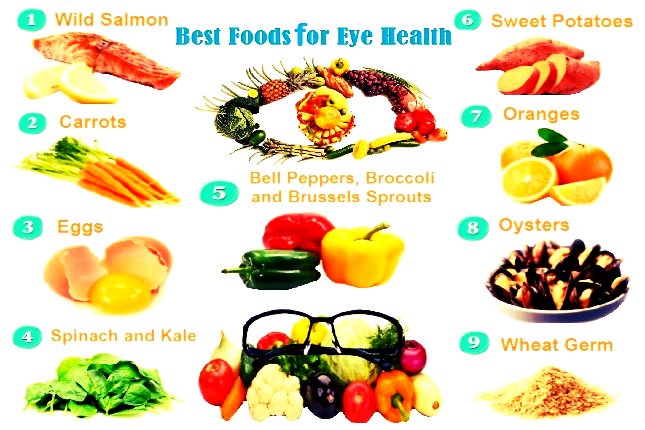 |
| The best foods for eye health and maintaining good eyesight |
20
Best Foods for Eye Health and Eyesight Improvement
Healthy Food Choices
Healthy food is
defined as a variety of foods that provide the body with the nutrients needed
to maintain its health and provide it with energy, in addition to generating a good feeling for the body. These include carbohydrates, proteins, and fats in
addition to minerals, vitamins, and water.
defined as a variety of foods that provide the body with the nutrients needed
to maintain its health and provide it with energy, in addition to generating a good feeling for the body. These include carbohydrates, proteins, and fats in
addition to minerals, vitamins, and water.
In fact,
healthy nutritional practices begin at an early stage in a person’s life, as
breastfeeding helps healthy growth, cognitive development, as well as other
health benefits in the long term.
healthy nutritional practices begin at an early stage in a person’s life, as
breastfeeding helps healthy growth, cognitive development, as well as other
health benefits in the long term.
A healthy
diet is essential to maintaining overall health and helps prevent malnutrition
in all its forms and non-communicable diseases, such as heart disease,
diabetes, and cancer.
diet is essential to maintaining overall health and helps prevent malnutrition
in all its forms and non-communicable diseases, such as heart disease,
diabetes, and cancer.
A balanced and healthy diet is also essential to maintaining eye health and safety. Many
people suffer from poor or distorted vision or may have difficulty seeing near
or far objects.
Good attention to the eyes has a vital role in maintaining
their health. Proper and healthy food is an integral part of eye health.
The
safety of the eyes depends on certain foodstuffs such as vitamin A and vitamin
C, fatty acids, minerals, and antioxidants.
Read more: How to Make Healthy Food Choices
people suffer from poor or distorted vision or may have difficulty seeing near
or far objects.
Good attention to the eyes has a vital role in maintaining
their health. Proper and healthy food is an integral part of eye health.
The
safety of the eyes depends on certain foodstuffs such as vitamin A and vitamin
C, fatty acids, minerals, and antioxidants.
Read more: How to Make Healthy Food Choices
(adsbygoogle = window.adsbygoogle || []).push({});
Why is Good Nutrition
Important for Healthy Eyes?
The eyes need a
variety of different antioxidants to keep them healthy and strong, including
lutein, beta-carotene, omega-3 acids, zinc.
There are many ways and means that
will help you to keep your eyes healthy and reduce your chances of developing
eye diseases.
One of these methods is eating certain types of healthy foods.
Good nutrients can help overcome age-related vision problems.
While eating
highly processed foods and a diet high in saturated fat and sugar can increase
the risk of eye problems such as macular degeneration and cataracts.
Other
factors, such as dehydration and diabetes, can also lead to eye conditions and
chronic vision problems.
So, you must choose a balanced and healthy diet and
good nutrients like omega-3 fatty acids, vitamins C and E, lutein and
zinc.
variety of different antioxidants to keep them healthy and strong, including
lutein, beta-carotene, omega-3 acids, zinc.
There are many ways and means that
will help you to keep your eyes healthy and reduce your chances of developing
eye diseases.
One of these methods is eating certain types of healthy foods.
Good nutrients can help overcome age-related vision problems.
While eating
highly processed foods and a diet high in saturated fat and sugar can increase
the risk of eye problems such as macular degeneration and cataracts.
Other
factors, such as dehydration and diabetes, can also lead to eye conditions and
chronic vision problems.
So, you must choose a balanced and healthy diet and
good nutrients like omega-3 fatty acids, vitamins C and E, lutein and
zinc.
Eye Diseases Prevented by a
Healthy Diet
There are many
diseases and health conditions that may affect the eye, which can often be
stopped and avoided if an appropriate diet is followed. Eye
diseases that you may be able to prevent with healthy food include:
diseases and health conditions that may affect the eye, which can often be
stopped and avoided if an appropriate diet is followed. Eye
diseases that you may be able to prevent with healthy food include:
- Age-related
macular degeneration, which leads to a progressive deterioration in vision and
limits your eyesight. - Cataracts, a health condition that causes blurry vision.
- Night
blindness, or nyctalopia - Glaucoma
- Dry eyes.
So, try to
follow a rainbow-colored diet, i.e. a diet rich in naturally colored materials
of vegetables and fruits.
With a simple change in your diet, you can maintain
the health and safety of your eyes in the long run.
In fact, there are certain
food items that must be consumed regularly in order to protect you from various
vision problems.
These foods help you cope with an existing disease or help you
cope with any other problems that may occur later.
(adsbygoogle = window.adsbygoogle || []).push({});
20 Best Foods for Eye
Health and Maintaining Good Eyesight
Good nutrients
are very important and necessary for the needs of the body’s systems to
function in a healthy way, especially eye health.
Maintaining good health
includes eating a healthy diet and an active lifestyle. This usually indicates
heart health, bone strength, and healthy architecture. But maintaining healthy
also means maintaining a stronger sense of vision.
With age, many people
develop various vision problems. Some eye diseases; cataracts, or dry eyes and
other problems can be avoided by following some simple nutritional guidelines
and eating healthy foods that are beneficial to the health of the eyes.
are very important and necessary for the needs of the body’s systems to
function in a healthy way, especially eye health.
Maintaining good health
includes eating a healthy diet and an active lifestyle. This usually indicates
heart health, bone strength, and healthy architecture. But maintaining healthy
also means maintaining a stronger sense of vision.
With age, many people
develop various vision problems. Some eye diseases; cataracts, or dry eyes and
other problems can be avoided by following some simple nutritional guidelines
and eating healthy foods that are beneficial to the health of the eyes.
These are the
most important foods necessary to strengthen your eyes:
most important foods necessary to strengthen your eyes:
1. Fish like salmon and
sardines
The retina
requires two types of omega-3 fatty acids: “DHA” and “EPA” and they are
found in fatty fish. These acids protect the eye from macular degeneration and
cataracts. The low levels of these fatty acids are associated with dry eyes.
requires two types of omega-3 fatty acids: “DHA” and “EPA” and they are
found in fatty fish. These acids protect the eye from macular degeneration and
cataracts. The low levels of these fatty acids are associated with dry eyes.
Fish generally
contain large amounts of fatty acids and omega-3s that are essential to a
healthy lifestyle and are very important to the health of the retina, as they
prevent dry eyes. Salmon and sardines are better because they contain more
omega-3s. Omega-3 helps protect the tiny blood vessels surrounding the eyeball.
Try to eat several servings of fish (especially salmon) per week, and try to
resort to marine fish species, not those that were raised in private ponds or
farms.
This is because marine fish have higher levels of omega-3 acids and
lower levels of saturated fat. Therefore, care must be taken to eat salmon or
sardines regularly to improve vision.
contain large amounts of fatty acids and omega-3s that are essential to a
healthy lifestyle and are very important to the health of the retina, as they
prevent dry eyes. Salmon and sardines are better because they contain more
omega-3s. Omega-3 helps protect the tiny blood vessels surrounding the eyeball.
Try to eat several servings of fish (especially salmon) per week, and try to
resort to marine fish species, not those that were raised in private ponds or
farms.
This is because marine fish have higher levels of omega-3 acids and
lower levels of saturated fat. Therefore, care must be taken to eat salmon or
sardines regularly to improve vision.
2. Eggs
Eggs are one of
the very important foods for eye health, as yolk (egg yolks) contains high
levels of vitamin A, zinc, and lutein, which are all essential nutrients for
eye health.
Vitamin A usually works to protect the cornea from any potential
damage. Zinc contained in an egg helps your body use lutein and zeaxanthin from
egg yolk and ensures the integrity of the retina and generally helps improve
night vision.
Other elements found in eggs help reduce the chances of
developing some visual health problems caused by aging and enhance the amount
of protective pigment in the eye that controls central vision.
the very important foods for eye health, as yolk (egg yolks) contains high
levels of vitamin A, zinc, and lutein, which are all essential nutrients for
eye health.
Vitamin A usually works to protect the cornea from any potential
damage. Zinc contained in an egg helps your body use lutein and zeaxanthin from
egg yolk and ensures the integrity of the retina and generally helps improve
night vision.
Other elements found in eggs help reduce the chances of
developing some visual health problems caused by aging and enhance the amount
of protective pigment in the eye that controls central vision.
3. Poultry Meat
Poultry meat is
one of the easiest to eat foods in many forms, as it can be eaten grilled or
added to salads. Poultry is a healthy alternative to red meat, which contains a
large percentage of fat.
Poultry meat is rich in zinc, potassium, protein, and
iron, all of which are essential elements of visual strength.
Zinc is a vital
component of the poultry meat, which transports vitamin A from the liver to the
retina, used to make protective melanin pigment and is responsible for
producing enzymes associated with eye health.
As for iron, it helps to fight
eye damage, which keeps eyes healthy with age.
one of the easiest to eat foods in many forms, as it can be eaten grilled or
added to salads. Poultry is a healthy alternative to red meat, which contains a
large percentage of fat.
Poultry meat is rich in zinc, potassium, protein, and
iron, all of which are essential elements of visual strength.
Zinc is a vital
component of the poultry meat, which transports vitamin A from the liver to the
retina, used to make protective melanin pigment and is responsible for
producing enzymes associated with eye health.
As for iron, it helps to fight
eye damage, which keeps eyes healthy with age.
4. Milk and Dairy Products
Dairy and milk
products are generally very good for the health of your eyes, due to their high
content of vitamin A, in addition to other important nutrients such as zinc, as
vitamin A helps protect the cornea of the eye and zinc pulls vitamin A from the
liver and brings it to the eye to benefit from it.
products are generally very good for the health of your eyes, due to their high
content of vitamin A, in addition to other important nutrients such as zinc, as
vitamin A helps protect the cornea of the eye and zinc pulls vitamin A from the
liver and brings it to the eye to benefit from it.
It is worth
noting that zinc is present in the structure of the eye in its various parts,
such as the retina and the choroid eye.
noting that zinc is present in the structure of the eye in its various parts,
such as the retina and the choroid eye.
It is
preferable that you obtain dairy products and milk from animal sources that
were bred in natural environments and relied on feeding them on herbs, in order
to obtain the most nutritional benefit.
preferable that you obtain dairy products and milk from animal sources that
were bred in natural environments and relied on feeding them on herbs, in order
to obtain the most nutritional benefit.
(adsbygoogle = window.adsbygoogle || []).push({});
5. Dark Leafy Green Vegetables
Cabbage,
spinach and cauliflower are rich in vitamins C and E and carotene compounds
necessary for the retina, rich in vitamin A and reduce the long-term risk of eye
diseases including macular degeneration and cataracts.
spinach and cauliflower are rich in vitamins C and E and carotene compounds
necessary for the retina, rich in vitamin A and reduce the long-term risk of eye
diseases including macular degeneration and cataracts.
6. Spinach
Spinach
contains almost a large percentage of all types of vitamins, but the most
important of these elements are vitamin C, lutein, zeaxanthin, and
beta-carotene. Spinach also contains high concentrations of antioxidants that
help to combat eye diseases.
As for zeaxanthin and lutein, it helps
increase the intensity of the pigment in the lens area, which acts as a natural
eye-protective eye, by absorbing about 40-90% of the harmful sunlight.
contains almost a large percentage of all types of vitamins, but the most
important of these elements are vitamin C, lutein, zeaxanthin, and
beta-carotene. Spinach also contains high concentrations of antioxidants that
help to combat eye diseases.
As for zeaxanthin and lutein, it helps
increase the intensity of the pigment in the lens area, which acts as a natural
eye-protective eye, by absorbing about 40-90% of the harmful sunlight.
7. Bell Peppers
The red pepper
is an excellent source of vitamin C, good for blood vessels in the eye.
Scientists believe that it reduces the risk of developing cataracts. Brightly
colored peppers also contain eye-friendly vitamins A and E.
is an excellent source of vitamin C, good for blood vessels in the eye.
Scientists believe that it reduces the risk of developing cataracts. Brightly
colored peppers also contain eye-friendly vitamins A and E.
Green pepper is
a vital ingredient for maintaining vision strength. Green pepper also contains
a high content of antioxidants and other vitamins that will protect the
eyes.
a vital ingredient for maintaining vision strength. Green pepper also contains
a high content of antioxidants and other vitamins that will protect the
eyes.
Peppers can be
eaten in fresh form, in sauces, or sandwiches, or they can be added when
cooking different dishes.
eaten in fresh form, in sauces, or sandwiches, or they can be added when
cooking different dishes.
8. Wheat Germ
Wheat germ is
cholesterol and sodium-free food. If you eat wheat germ daily, this can give
you a massive boost of nutrients for eye health and help prevent common eye
diseases and disorders such as age-related macular degeneration, cataracts, and
glaucoma.
cholesterol and sodium-free food. If you eat wheat germ daily, this can give
you a massive boost of nutrients for eye health and help prevent common eye
diseases and disorders such as age-related macular degeneration, cataracts, and
glaucoma.
9. Almonds
Almonds are
like other nuts and seeds that are important to eye health, due to their high
content of vitamin E, which protects the body from some unstable molecules and
electrolytes that usually target healthy tissues in the body.
like other nuts and seeds that are important to eye health, due to their high
content of vitamin E, which protects the body from some unstable molecules and
electrolytes that usually target healthy tissues in the body.
Consuming
vitamin E at a regular rate will work to combat any possible health
consequences that may arise with age, so try as much as possible to consume 15
milligrams of vitamin E per day or the equivalent of approximately 23 tablets
of almonds per day.
You can also get vitamin E from other sources rich in it,
such as sunflower seeds, hazelnuts, and pistachios.
vitamin E at a regular rate will work to combat any possible health
consequences that may arise with age, so try as much as possible to consume 15
milligrams of vitamin E per day or the equivalent of approximately 23 tablets
of almonds per day.
You can also get vitamin E from other sources rich in it,
such as sunflower seeds, hazelnuts, and pistachios.
(adsbygoogle = window.adsbygoogle || []).push({});
10. Sunflower Seeds and Nuts
About 28.34
grams of these seeds or almonds contain half of the amount of vitamin E
recommended by the USDA for adults every day. A large study found that vitamin
“E”, along with other nutrients, can help slow age-related macular
degeneration, and may also help prevent cataracts.
grams of these seeds or almonds contain half of the amount of vitamin E
recommended by the USDA for adults every day. A large study found that vitamin
“E”, along with other nutrients, can help slow age-related macular
degeneration, and may also help prevent cataracts.
11. Curly Kale
Curly kale is
one of the superfoods because it contains essential and important vitamins and
minerals, in addition to antioxidants and other elements such as lutein, which
is found in high levels in other foods such as eggs.
The nutrients present in
the kale are very important to prevent some serious eye diseases.
one of the superfoods because it contains essential and important vitamins and
minerals, in addition to antioxidants and other elements such as lutein, which
is found in high levels in other foods such as eggs.
The nutrients present in
the kale are very important to prevent some serious eye diseases.
It is worth noting
that the body needs approximately 10 milligrams of lutein, while a portion of
100 grams of kale cabbage contains approximately 11.4 of lutein, more than the
recommended portion!
that the body needs approximately 10 milligrams of lutein, while a portion of
100 grams of kale cabbage contains approximately 11.4 of lutein, more than the
recommended portion!
12. Squash
Your body
cannot make lutein and zeaxanthin, but you can get it from pumpkins or squash
all year round. Summer squash contains vitamin C and zinc, and winter squash
gives you vitamins A and C as well as omega-3 fatty acids.
cannot make lutein and zeaxanthin, but you can get it from pumpkins or squash
all year round. Summer squash contains vitamin C and zinc, and winter squash
gives you vitamins A and C as well as omega-3 fatty acids.
13. Oranges
Oranges are a
fruit of the citrus family known to be rich in vitamin C, which is essential
for eye health. This vitamin (which is especially found in fresh vegetables and
fruits) works to protect and promote the health of the blood vessels in the
eyes.
Vitamin C, if taken with other nutrients, can also help protect the eyes
from health problems that may arise with age.
fruit of the citrus family known to be rich in vitamin C, which is essential
for eye health. This vitamin (which is especially found in fresh vegetables and
fruits) works to protect and promote the health of the blood vessels in the
eyes.
Vitamin C, if taken with other nutrients, can also help protect the eyes
from health problems that may arise with age.
14. Sweet Potato
Orange-colored
fruits and vegetables, such as sweet potatoes, melons, mangoes, and apricots,
contain high levels of beta-carotene, a form of vitamin A that helps reduce
night vision problems. Sweet potatoes can be eaten either cooked, grilled or
fried like regular potatoes.
fruits and vegetables, such as sweet potatoes, melons, mangoes, and apricots,
contain high levels of beta-carotene, a form of vitamin A that helps reduce
night vision problems. Sweet potatoes can be eaten either cooked, grilled or
fried like regular potatoes.
15. Carrots
Carrots are
very important to the health of the eyes, and like the egg yolk, carrots
contain high levels of vitamin A, beta-carotene and antioxidants. Nutrients
like beta-carotene, help protect the surface of the eye and prevent infections
or serious eye diseases.
very important to the health of the eyes, and like the egg yolk, carrots
contain high levels of vitamin A, beta-carotene and antioxidants. Nutrients
like beta-carotene, help protect the surface of the eye and prevent infections
or serious eye diseases.
Carrot is one
of the foods that can be easily added to many dishes and salads, in case you do
not want to eat it in its fresh form. It is also advised to provide carrot
juice to infants at the beginning of serving solid food.
of the foods that can be easily added to many dishes and salads, in case you do
not want to eat it in its fresh form. It is also advised to provide carrot
juice to infants at the beginning of serving solid food.
(adsbygoogle = window.adsbygoogle || []).push({});
16. Tomatoes
Red tomatoes
are also among the foods that are beneficial to the eye. tomatoes
contain very beneficial health pigment called lycopene. Tomatoes contain
carotenoids similar to those on carrots and have similar beneficial effects.
are also among the foods that are beneficial to the eye. tomatoes
contain very beneficial health pigment called lycopene. Tomatoes contain
carotenoids similar to those on carrots and have similar beneficial effects.
Tomatoes not
only protect the eyes from the harmful effects of ultraviolet rays but also
prevent the weakening of the eye muscles that causes vision deterioration.
In
addition, tomatoes also contain vitamin A and vitamin C, both of which are very
important to maintain eye health, vitamin ( A) protects the cornea, while
vitamin C reduces the risk of glaucoma and cataract, so tomatoes are among the
foods that are beneficial to the eye.
only protect the eyes from the harmful effects of ultraviolet rays but also
prevent the weakening of the eye muscles that causes vision deterioration.
In
addition, tomatoes also contain vitamin A and vitamin C, both of which are very
important to maintain eye health, vitamin ( A) protects the cornea, while
vitamin C reduces the risk of glaucoma and cataract, so tomatoes are among the
foods that are beneficial to the eye.
17. Berries
Berries are a
useful food for the eye because it contains vitamin C and is an antioxidant
that is important for eye health.
Vitamin C also reduces the risk of glaucoma,
cataracts and vision loss associated with aging,
useful food for the eye because it contains vitamin C and is an antioxidant
that is important for eye health.
Vitamin C also reduces the risk of glaucoma,
cataracts and vision loss associated with aging,
Lutein is found
in most foods beneficial to the eye and is also present in berries, as it
increases blood circulation in the eyes and improves night vision and thus
prevents night blindness.
in most foods beneficial to the eye and is also present in berries, as it
increases blood circulation in the eyes and improves night vision and thus
prevents night blindness.
Berries are
available in all markets, you can eat them at breakfast or as juice, so it is
one of the best foods that are beneficial to the eye.
available in all markets, you can eat them at breakfast or as juice, so it is
one of the best foods that are beneficial to the eye.
18. Beans and Legumes
Beans and
legumes have high fibers that help maintain sharp vision at night and delay
macular degeneration.
legumes have high fibers that help maintain sharp vision at night and delay
macular degeneration.
19. Broccoli
Broccoli
contains a mixture of nutrients, such as vitamin A, lutein, zeaxanthin,
beta-carotene, vitamin C, and vitamin E, which are all antioxidants that
protect cells in your eyes from free radicals.
contains a mixture of nutrients, such as vitamin A, lutein, zeaxanthin,
beta-carotene, vitamin C, and vitamin E, which are all antioxidants that
protect cells in your eyes from free radicals.
20. Oysters
Oysters are one
of the best sources of the mineral zinc, which is commonly enjoyed by healthy
eyes. The mineral zinc helps vitamin A produce melanin, an eye-protective
pigment.
of the best sources of the mineral zinc, which is commonly enjoyed by healthy
eyes. The mineral zinc helps vitamin A produce melanin, an eye-protective
pigment.
How can
You Improve Your Eyesight Naturally?
Aside from
following a healthy diet, you can maintain your eye health by making simple
lifestyle adjustments such as:
following a healthy diet, you can maintain your eye health by making simple
lifestyle adjustments such as:
- Wear sunglasses
when out. - Stay away from
smoking. - Maintain a
healthy weight. - Wear eye
protection when practicing somewhat violent sports, or when conducting
scientific experiments. - Maintain
healthy blood pressure. - Visit the
ophthalmologist once every 1-2 years.
Read more: Eye Diseases and Disorders: How to Protect Your Eyes Naturally
(adsbygoogle = window.adsbygoogle || []).push({});