What is the Importance of Psychology in Our Daily Lives and How Psychology can Help You Improve Your Lifestyle?
Do you think psychology is only for students,
academics and therapists? If so, you should think again because psychology is
both a practical and theoretical topic that can be used in many ways.
Psychology is the study of people’s behavior, cognitive attitude, performance, and mental functioning.
Psychology plays a crucial role in our daily lives, shaping the way we think, feel, and behave. It helps us understand ourselves and others, improving relationships, decision-making, and overall well-being.
Psychology is everywhere, influencing your thoughts, actions, and interactions. It can truly help you lead a happier and more fulfilling life.
In this article, we have discussed the importance of psychology in our daily lives and some important
uses of psychology that can change your life for the better.
Article Updated on 22 May, 2025.
 |
| Psychology in Everyday Life |
The Science of the Mind: Understanding Psychology
Psychology is the scientific study of the mind and behavior, exploring how thoughts, emotions, and experiences shape human actions. It helps us understand personality, memory, learning, and mental health, offering insights into why people think and act the way they do.
From cognitive functions to social interactions, psychology influences decision-making, relationships, and emotional well-being. It plays a key role in stress management, problem-solving, and personal growth.
If you can apply psychological principles, you can develop resilience, improve communication, and enhance mental health.
Understanding psychology empowers us to navigate life more effectively, fostering self-awareness and emotional intelligence for a balanced and fulfilling existence.
Psychology can be applied in all areas of life. It is used to better understand and help
people with psychological
disorders, treat mental health problems and improve the education
system, workplace behavior, and relationships.
The Importance of Psychology in Everyday
Life
Psychology is deeply woven into daily life, shaping thoughts, emotions, and behaviors. It enhances self-awareness, helping individuals understand themselves and others better.
Managing stress, improving relationships, and making informed decisions all stem from psychological principles. It plays a key role in mental health, promoting emotional resilience and positive thinking.
Psychology also boosts productivity by refining habits and motivation. It influences every aspect of human interaction, offering tools for well-being and success in a rapidly evolving world.
The
importance of psychology is highlighted in two aspects:
Theoretical Aspects of Psychology
Theoretical aspects of psychology provide foundational frameworks for understanding human thoughts, emotions, and behaviors.
Psychology examines in its theoretical aspects psychological phenomena and behavioral patterns that appear on the
individual’s external behavioral reactions to access general principles and
laws. It controls the presence of a particular event, mechanism and how it
appears.
Here are some key psychological theories:
Psychoanalytic Theory (Sigmund Freud) focuses on unconscious motives, childhood experiences, and the structure of personality (id, ego, superego). It explains defense mechanisms and how suppressed thoughts influence behavior.
Behavioral Theory (B.F. Skinner, Ivan Pavlov) focuses on how behaviors are learned and influenced by external factors, emphasizing the role of conditioning and reinforcement. Pavlov’s classical conditioning links stimuli to responses, while Skinner’s operant conditioning reinforces behavior through rewards and punishments, influencing habits, learning, and emotions.
Cognitive Theory (Jean Piaget, Albert Bandura) explores thought processes, problem-solving, and memory. Piaget focused on developmental stages, while Bandura emphasized observational learning and social influences, shaping behavior through perception, memory, and interactions with the environment.
Humanistic Theory (Carl Rogers, Abraham Maslow) emphasizes personal growth, self-actualization, and free will. Maslow’s hierarchy of needs and Rogers’ concept of self-worth highlight human potential, intrinsic motivation, and the pursuit of fulfillment and authenticity.
Social Psychology (Leon Festinger, Philip Zimbardo) examines how societal influences shape behavior. Festinger studied cognitive dissonance, while Zimbardo explored authority and conformity, revealing how group dynamics, social identity, and environmental factors impact human interactions and decision-making.
Biological psychology explores how genetics, brain structures, and neurotransmitters influence behavior. It examines the nervous system’s role in emotions, cognition, and mental health, linking biology to psychological processes and human experiences.
These theories offer diverse perspectives on psychology, each contributing valuable insights into human behavior.
Aspects of Applied Psychology
Psychology has numerous real-world applications, influencing various aspects of life and society. Here are some key areas where psychology is practically applied:
Health and Therapy: Health Psychology explores mental and physical health connections, promoting stress management, healthy habits, and coping mechanisms for overall well-being and illness prevention. It helps diagnose and treat mental disorders. Techniques like cognitive-behavioral therapy (CBT) aid emotional regulation, stress management, and coping strategies for anxiety, depression, and trauma recovery.
Education and Learning: Psychological theories shape effective teaching methods. Understanding cognitive development, motivation, and learning styles improves student engagement, knowledge retention, and problem-solving skills in academic and professional settings. Research methods in educational psychology help study how people learn, develop, and respond to different teaching strategies.
Workplace and Organizational Behavior: Psychology enhances productivity, leadership, and teamwork. It optimizes workplace dynamics, resolves conflicts, improves communication, and fosters motivation, ensuring job satisfaction and efficient organizational functioning.
Consumer Behavior and Marketing: Psychological principles analyze purchasing decisions, emotional responses, and cognitive biases. Marketing strategies leverage psychology to influence customer engagement, brand loyalty, and advertising effectiveness.
Criminal Psychology and Law Enforcement: Psychology aids criminal profiling, investigation techniques, and rehabilitation programs. It assesses criminal motives, behavioral patterns, eyewitness reliability, and psychological impacts on victims and offenders.
Social Behavior and Relationships: Psychology studies group dynamics, cultural influences, and emotional intelligence. It helps build interpersonal relationships, resolve conflicts, enhance communication, and strengthen human connections in personal and social settings.
Sports Psychology: Boosts athletic performance using motivation, focus training, and resilience techniques, helping athletes optimize results under pressure.
Environmental Psychology: Studies how surroundings impact behavior, well-being, and sustainable living, designing spaces to improve mental health and productivity.
Political Psychology: Analyzes voter behavior, leadership influence, and societal attitudes, shaping public opinion and decision-making in governance.
Developmental Psychology: Studies human growth across life stages, focusing on cognitive, emotional, behavioral social changes, aiding education, parenting, and aging studies. Developmental psychology examines nature vs. nurture, sequential development, plasticity, and individual differences, highlighting how genetics, environment, and learning shape behavior over time.
Military Psychology: Supports soldiers in stress management, trauma recovery, and leadership training, enhancing operational effectiveness.
AI and Human-Computer Interaction: Improves user experience, studying how psychological responses shape interactions with technology and automation.
Through applied studies, psychology
employs theoretical principles and laws in the process of mentoring,
controlling and changing human behaviors for the better.
Applied psychology designs criteria and standards that depend on distinguishing normal
behaviors from abnormal behaviors, i.e., judging behavior whether it is normal
or abnormal through these criteria and standards.
Psychology
is very important in the lives of different individuals and communities. At the
origin of psychological
studies, psychology is concerned with the treatment and understanding of
human behavior. It attempts to bring about the required change and modification
of this behavior.
Psychology
can also be used in different fields of educational life, such as books,
curricula, and various teaching aids.
➮Psychology
can control individual behaviors and predict their occurrence.
➮It can
study the different types of human and animal behavior.
➮It can
study the laws that affect psychological phenomena, interpret them, predict
them, and try to modify them if they need modification.
➮It can
assist individuals in selecting ways and types of thinking.
➮It can
assist students in investing their time in the right way of studying and
gaining knowledge.
➮It can
help individuals organize their different lifestyles.
➮It can
help build relationships based on mutual respect between different individuals
and groups.
Why Should You Study Psychology?
Psychology
is one of the most important and most popular university disciplines. There are
many criticisms directed at psychology, for example, psychology is an
underdeveloped field and the future wages of this work are relatively low, in
addition to the lack of adequate employment opportunities.
If you
are interested in studying psychology, we recommend that you read these most
important psychological
facts that will certainly motivate you to study this interesting
specialty.
1. Psychology is a social science
Psychology
is a social science that is based on scientific methods and
principles. Although the focus of psychology is primarily on studies and
statistics, this is the least field in which psychology is practiced after
graduation.
So do
not worry about the future of your study for this specialty, there are many
opportunities and areas that you can benefit from your study of psychology in
them.
2. Psychology helps in understanding
relationships
The
study of psychology does not necessarily make you healthier, but the study of
psychology offers you greater knowledge and understanding of personal, family
and professional relationships.
This means that studying psychology will surely
allow you to solve all the relationship problems that you or anyone else from
your circle of knowledge may experience.
3. Psychology helps build critical thinking
skills
Psychology
– with the help of methods taught during the study of this specialization –
focuses heavily on how to think critically.
Critical
thinking is one of the most important methods of thinking at all. This kind of
thinking helps in all areas of life, especially educational areas, and this
type of thinking helps greatly to develop yourself and show your best talents
and abilities.
4. Psychology offers greater employment opportunities
Contrary
to popular belief that psychology does not offer you much employment
opportunities, in fact, psychology graduates have very good job opportunities
and many more!
If you
study psychology, you will be required to work in many areas such as law,
social services, education, business, and many other professions. The real
trick is how you present your degree
in psychology.
If you
know its value fully and trust the necessity of psychology services in
practical life, you will convince everyone of the need to hire you.
If you do
not appreciate the value of your studies and do not know the importance of your
work, you will certainly not get the job you are applying for.
5. Psychology is one of the most effective areas
in the workplace
Organizational
industrial psychology focuses on understanding the human nature of employees in
the workplace.
Knowledge
of human behavior is the most important focus when it comes to presenting a
work; your knowledge of the basics of psychology makes you a more important
employee/manager in the workplace.
What is the Role of Psychology in the
Workplace?
The
study reports suggest that employees are not only seeking high pay and
financial incentives, but they seek a better working environment.
So if
managers seek to maintain their employees and the best productivity of
employees, they must create a positive environment and a balanced atmosphere that
takes into account the psychological
conditions of employees as much as possible.
Here
comes the role of psychology in influencing the work environment, where we
study the work environment in the workplace and choose comfortable and
appropriate psychological programs in order to give a touch of psychological
comfort to make the work environment the best.
As
mentioned earlier, most employees look for a comfortable and cozy working
environment, contrary to rumors that employees are looking for high
wages.
Psychology
is used in the work environment to link organizational, productive and consultative
processes, in addition to providing clinical services to all staff who feel
the need to speak with a psychologist.
The
provision of these services by psychiatrists in the work environment raises the morale of employees, promotes employees’ commitment to work, and increases
worker productivity.
How Can You Apply Psychology to Enhance Your Lifestyle?
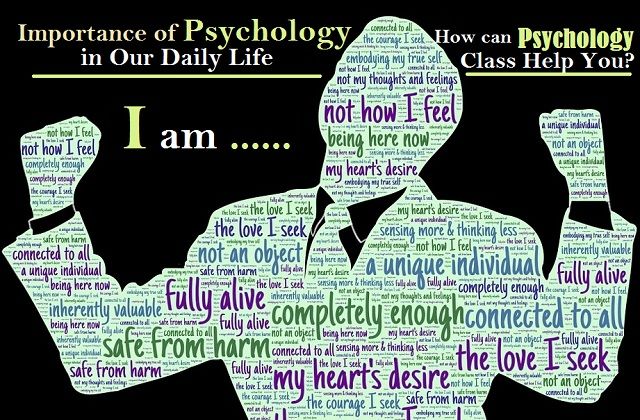 |
| How psychology classes can help you |
Psychology
is particularly of great importance as it relates to the study of mental
processes and behavior at the same time. It is used to better understand and
help people with psychological
disorders and mental illnesses.
Psychology helps improve lifestyle by enhancing self-awareness, emotional regulation, and decision-making.
Understanding cognitive biases allows for smarter choices, while emotional intelligence strengthens relationships and communication.
Stress management techniques, like mindfulness and positive thinking, improve mental well-being. Psychology also aids in habit formation, boosting productivity and motivation.
Behavioral strategies help in overcoming procrastination, while self-actualization theories encourage personal growth.
Applying psychological principles in daily life fosters resilience, better coping mechanisms, and overall happiness.
Whether through therapy, self-reflection, or learning new skills, psychology offers valuable insights for personal development, leading to a balanced, fulfilling, and healthier lifestyle.
6 Ways Psychology Can Help You Live a Better Life
Psychology
is also applied in our daily lives and in many things. Here, we have mentioned
some practical uses of psychology that can change your life for the better.
Stay Motivated and Stick with Your Goals
Staying motivated and sticking with your goals requires discipline, smart strategies, and the right mindset. Psychological techniques can help you stay on track. Whether
your goal is to lose weight, quit smoking or learn a new
language.
Educational
psychology offers tips and strategies for getting motivated, to increase
your motivation levels when you approach a task.
You can
use some of the following tips from research in cognitive
and educational psychology:
–
Introduce new items to keep your interest high.
– Learn
new things based on your current knowledge.
– Set
clear goals that are directly related to the task.
– Reward
yourself for a good job.
Improve Your Communication Skills
Communication
involves much more than the way you talk or write. Research
suggests that nonverbal signals are a big part of our personal communication,
and to communicate your message effectively.
You have
to learn how to express yourself in a non – verbal way and read the non –
verbal signals around you.
Some of the key strategies include:
– Start
to notice non-verbal signals in others.
– Learn
how to use sound tones to enhance your message.
– Learn
how to master the art of non-verbal communication.
– Use
good eye contact.
Learn to Understand Others Better
Like
non-verbal communication, being able to understand your emotions and those
around you plays an important role in your relationships and career.
Emotional
intelligence refers to your ability to understand your feelings as
well as those of others.
Your
emotional intelligence is a measure of this ability, and your reward may
actually be more important than your IQ.
To become smarter
emotional, consider some of the following strategies:
–
Evaluate your emotional reactions carefully.
– Record
your experience and emotions in a daily magazine.
– Try to
see positions from someone else’s perspective.
Improve
Your Memory Power
Psychology can play a crucial role in improving your memory power. If you understand how memory works and employing specific techniques, you can significantly enhance your ability to recall information and retain knowledge.
Remembering is
an important element in human life, good memory treasure must be preserved and
developed. Any memory imbalance confuses the path of life, and forgetfulness
often becomes inherent.
Have you
ever wondered why you remember the minute details of childhood events, but
forgot the name of the new customer you met yesterday?
Research
on how to form new memories as well as how
and why we have forgotten has led to a number of results that can be
applied directly in your daily life.
Our
brains lose the ability to remember certain places and things over time. Just
as we do muscle-strengthening exercises, we should also improve our memory by
doing some exercise. We
should also pay attention to brain health and follow the advice that can
prevent diseases such as Alzheimer’s
or dementia.
Improve Your Leadership Skills
No
matter if you are an office manager or a volunteer in a local youth group, you
probably have good leadership skills necessary at some point in your
life.
Not
everyone is a born leader, but some simple tips from psychological research can
help you improve your leadership skills. One of
the most famous studies on this topic considered three distinct leadership
styles.
Based on the results of this study and subsequent research, do some of
the following when you are in a leading position:
–
Provide clear guidelines, but allow group members to express their views.
– Talk
about possible solutions to problems with group members.
– Focus
on motivating ideas and be ready to reward creativity.
Make More Accurate Decisions
Cognitive psychology research studies have provided a wealth of
information about decision-making abilities. By applying these strategies to
your life, you can learn to make wiser choices.
Subsequent
research in this area, known as behavioral economics, has yielded some key
findings that you can use to make wiser options for money management.
The next time you need to make a big decision, try to use the “Six Thinking Hats method“, developed by Edward de Bono. Look at the attitude from multiple perspectives, including
rational, emotional, intuitive, creative, positive, and negative perspectives.
Conclusion: The Power of Psychology in Everyday Life
Psychology
is one of the most important sciences that can be studied at all. Psychology is
important and necessary in all areas of life.
Psychology plays a vital role in shaping our thoughts, emotions, and actions, influencing personal growth, relationships, and decision-making.
If you apply psychological principles, you can improve mental well-being, enhance productivity, and foster resilience.
Understanding psychology helps manage stress, develop positive habits, and navigate social interactions effectively.
Whether in education, work, or personal life, psychology provides tools for self-improvement and emotional intelligence.
One of
the most important features of psychology is that it is possible to develop a
conscious and distinctive generation.
Psychology helps
study the behavior of workers and improve the labor market and it is absolutely
necessary to have a psychologist in any medical team in hospitals or health
care centers.
It is
also necessary to have a psychologist in the workplace in order to maintain a
balanced and healthy work environment. In
addition, psychology also includes the psychology
of growth and development, as well as through which the study of crime and
its developments and others.
Embracing psychological insights leads to a balanced, fulfilling lifestyle.
Unlock the potential of psychology to transform your daily experiences and achieve lasting success.
In the end,
remember that you are making the right choice if you are seeking to study
psychology because it will open up unimaginable horizons in the future.