How
artificial intelligence is changing the future of education?
Artificial
intelligence has been successfully applied in many educational tools that help
develop teaching and learning skills and testing systems.
AI allows
teachers the time and freedom to provide understanding and adaptability. It can help
improve learning efficiency, student development, and teachers’ performance, as
well as it can drive personalization and streamline admin tasks.
Let’s understand the key role of Artificial Intelligence in education today and how AI technology will change the future of education.
The Role of Artificial Intelligence in Education – How AI Technology will Change the Future of Education?
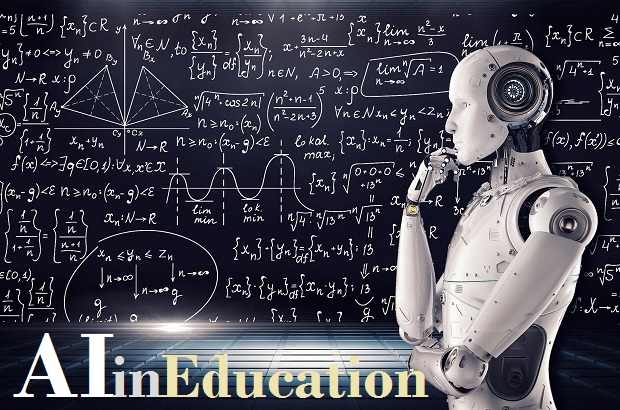 |
| Artificial intelligence in education |
Artificial Intelligence in Education
relationships between companies and their customers in almost all areas of the
market. From predictive analytics and data mining techniques to chatting, etc.,
artificial intelligence is providing a powerful tool for businesses to learn
more about their customers.
are currently used in learning processes.
which rely on artificial intelligence systems to help the human brain to learn
more effectively, may appear at first?
novels, but in fact, it is the future of modern education.
applied successfully in several educational tools that help improve learning
efficiency and teaching strategies and develop skills and testing systems.
10 effective roles of artificial intelligence in the education system, which
will define and shape future educational experience.
Why Do We Need Artificial Intelligence in
Our Classroom?
than school budgets. This can limit individual interaction between students and
teachers. Some experts argue that pressure on classroom resources may have led
to low efficiency at present on topics such as mathematics.
solutions that can supplement children’s time in the classroom makes the Global
Education Technology Market a paralyzed sector.
recently, lacked the required development, prompting both start-ups and
companies with many years in the industry to find no learning solutions based
on the use of artificial intelligence to interact with students, where they
excel and where they need improvement.
How
AI Technology is making the education system more relevant?
to analyze many data points that only the teacher can measure.
multi-choice math question and what we can learn by analyzing student
interaction.
outcome and mark, artificial intelligence systems can go deeper to learn more
about where a student is struggling.
can look at individual questions to determine whether the student is suffering
from the general concept or perhaps there is confusion in the question of why
the student is confused.
know the wrong answers they have chosen in return for the answers they have
been able to select correctly.
order of operations, in which case artificial intelligence technologies can
determine the step that is missing from the student and help them learn the
right way.
with which a student answers questions, can help determine whether the student
has mastered the subject or just an educated guess.
consider separately how other students of the same age and grade respond to a
particular question and determine the utility of the question itself.
low coordination, eventually leading to confusion. Artificial intelligence can
also be used to interact with parents and students to alert them to problem
areas.
for future analysis as new developments in learning science are undertaken.
electronic devices than ever before.
creating advanced learning programs that facilitate learning by matching
scientific research with advanced predictive analysis and artificial
intelligence.
short tests for students on mobile devices that they must answer correctly
before reaching their devices.
difficulty of the questions is adjusted based on their abilities.
teachers to create an online curriculum that students can access at any time.
are used to identify gaps in knowledge and recommend any subject that a student
should then study based on his abilities.
faculty member of Princeton University based on an artificial intelligence
engine that could create unlimited mathematical questions. These questions are
analyzed by their artificial intelligence engine and a decision is made on the
student’s strengths and weaknesses.
How Artificial Intelligence will Reshape the
Future of Education?
Artificial intelligence in education that help students and teachers get better
educational experiences and reshape the future of the education industry.
1. Artificial intelligence systems can adapt
educational programs to students’ needs.
one of the main ways artificial intelligence will affect education is by
applying higher levels of individual learning.
through an increasing number of adaptive learning programs, games, and
software.
needs, focusing more on specific topics, repeating things that students have
not mastered, and generally helping students work at their own pace.
2. Artificial intelligence can automate
basic activities in education, such as classification and grading.
the tests of large lecture courses can be tedious, teachers often find that
classifications take a lot of time, which can be used to interact with
students, prepare for class, or work on professional development.
techniques, it is now possible for teachers to perform automatic classification
of all types of multiple tests.
3. Students can get additional help
from artificial intelligence.
that human teachers can provide and machines cannot do that, still, there are
some special education programs based on artificial intelligence that can
help students in basic math and writing and other subjects.
the basics, but so far they are not ideal to help students learn high-level
thinking and creativity skills, something that real teachers still need to
facilitate.
possibility that artificial intelligence teachers will be able to do these
things in the future with the rapid pace of technical progress that has
characterized the past few decades.
4. Programs based on artificial
intelligence systems can provide useful comments to students and teachers.
not limited to helping teachers and students only prepare training courses
customized according to their needs, but they can also, provide feedback to
each other about the success of the course as a whole.
online offerings, use artificial intelligence systems to monitor student
progress and to alert professors when there is a problem with student
performance.
5. Artificial Intelligence can help improve
your coursework as much as possible.
gaps in their lectures and learning materials that can leave students confused
about certain concepts.
provide a way to solve this problem.
a wrong answer on homework, the system alerts the teacher and gives students a
personalized message that provides hints to the correct answer.
in the explanation that can occur in courses and helps to ensure that all
students build the same conceptual foundations.
to hear, students get instant feedback to help them understand the concept and
remind them how to do it correctly the next time.
6. Artificial intelligence will change
systems of how information is found and interacted with.
intelligence technologies affect the information we see and find on a daily
basis.
to the location, Amazon offers recommendations based on previous purchases,
Siri adapts to your needs and orders, and almost all web ads are geared towards
your interests and shopping preferences.
big role in how we interact with information in our personal and professional
lives.
based on artificial intelligence radically changed how we interact with
information and with newer and more integrated technology.
different experiences in researching and finding facts compared to today’s
students.
7. Artificial intelligence systems can make
learning through trial and error method less intimidating.
important part of learning, but for many students, the idea of failure or
even not knowing the answer is paralysis.
immediately in front of their peers or authority figures like a teacher.
designed to help students learn.
students with a way to learn in a relatively judgmental environment, especially
when artificial intelligence teachers can offer solutions for improvement.
systems are the ideal form to support this type of learning because artificial
intelligence systems themselves often learn through trial and error.
8. Artificial intelligence technologies can
change the role of teachers.
educators in the field of education, but this role and its consequences may be
changed by the new technology in the form of intelligent computing systems.
artificial intelligence systems can take on tasks such as classification, can
help students improve learning, and may even substitute for private lessons in
the real world.
be adapted to many other aspects of teaching as well. But in most cases,
artificial intelligence will turn the role of the teacher into a facilitator.
9. Data supported by artificial intelligence
technologies can change how schools find, teach, and support students.
supported by intelligent computer systems, is already making changes to how
colleges interact with potential and current students.
choose the best courses, smart computer systems help make every part of the
college experience more personalized to meet students’ needs and goals.
role in the higher scene today, but artificial intelligence can lead to further
change in higher education.
some schools to provide students with the training of artificial intelligence
systems that can ease the transition between college and high school.
10. Artificial intelligence systems will
change where students learn and acquire basic skills.
decades in the future, the reality is that artificial intelligence has the
potential to change almost everything we take into consideration education.
systems, software, and support, students can learn from anywhere in the world
at any time, and with these kinds of programs that take the place of certain
kinds of classroom teaching, artificial intelligence systems may only replace
teachers in some cases.
Conclusion
Artificial Intelligence (AI) is set to reshape the educational landscape significantly. Personalized learning, driven by AI, can tailor educational experiences to individual needs, enhancing student engagement and performance.
The educational programs supported by AI technologies help students to learn basic skills but as these programs grow and developers learn more, they are likely to offer students a much wider range of services.
Intelligent tutoring systems provide instant feedback and support, allowing students to learn at their own pace. AI-powered analytics can identify learning gaps and predict student outcomes, helping educators intervene early to support struggling learners.
AI technology automates administrative tasks, freeing up educators to focus more on teaching and student interaction.
AI can also facilitate global access to education through online platforms, breaking down geographical barriers.
Overall, Artificial intelligence can enhance collaboration, promote adaptive learning, streamline administrative processes, and hold the promise of a more efficient, inclusive, and personalized education system for the future.