Bitcoin is a
cryptocurrency, a form of electronic cash and an innovative payment network and
a new type of money.
Bitcoin is the
first decentralized digital currency, in fact, bitcoin is completely virtual
coins that are designed to be self-contained for their value and banks do not
need to move and store.
Once you are
the owner of Bitcoins, they behave like physical gold coins: they have value
and business just as if they were nuggets in their pockets.
You can use
your bitcoin to buy goods and services online, or you can remove them and hope
that their value will increase in years.
 |
|
Bitcoin is the world’s first decentralized digital currency introduced in 2009, by Satoshi Nakamoto – the fictitious name of the cryptocurrency’s creator(s). |
Bitcoin: A Peer to
Peer Electronic Cash system – How Bitcoin Works?
Bitcoin is a cryptocurrency, a form of electronic cash and an
innovative payment network and this is the first decentralized digital
currency.
innovative payment network and this is the first decentralized digital
currency.
What is Bitcoin?
Bitcoin is a
cryptocurrency, a form of electronic cash and an innovative payment network and
a new type of money.
cryptocurrency, a form of electronic cash and an innovative payment network and
a new type of money.
It is the first
decentralized digital currency that was designed to do transactional work
without the central bank or administrator interference.
decentralized digital currency that was designed to do transactional work
without the central bank or administrator interference.
Bitcoin is trading from a personal wallet to a second. The wallet is a small personal database that you
store on your computer drive, on your smartphone, on your tablet or anywhere in
the cloud.
store on your computer drive, on your smartphone, on your tablet or anywhere in
the cloud.
Bitcoin uses peer-to-peer
technology to work with a central authority or bank; the management of
transactions and the introduction of bitcoin is done collectively by the
network.
technology to work with a central authority or bank; the management of
transactions and the introduction of bitcoin is done collectively by the
network.
Use of Bitcoin is free
open for everyone; nobody owns and has the total right to control bitcoins,
and everyone can participate in it.
open for everyone; nobody owns and has the total right to control bitcoins,
and everyone can participate in it.
Although most
transactions are done through the cryptocurrency exchange market, transactions
through the network, nodes are verified through the revolution and are recorded
in a public distributed account called a blockchain.
transactions are done through the cryptocurrency exchange market, transactions
through the network, nodes are verified through the revolution and are recorded
in a public distributed account called a blockchain.
Bitcoin was first
proposed and then designed by a person named Satoshi Nakamoto. After that,
through its many unique properties, Bitcoin allows exciting and interesting
uses that can not be covered by any previous payment system in the world.
proposed and then designed by a person named Satoshi Nakamoto. After that,
through its many unique properties, Bitcoin allows exciting and interesting
uses that can not be covered by any previous payment system in the world.
Bitcoin is designed as a
reward in the software process known as mining. Bitcoin can be exchanged for
other currencies, services, and products.
reward in the software process known as mining. Bitcoin can be exchanged for
other currencies, services, and products.
After all, bitcoins
and altcoins are controversial because they take the power to release money
from central banks and give it to the general public.
and altcoins are controversial because they take the power to release money
from central banks and give it to the general public.
Bitcoin accounts
cannot be frozen or investigated by tax inspectors, and intermediary banks are
completely unnecessary for intermediates for bitcoins.
cannot be frozen or investigated by tax inspectors, and intermediary banks are
completely unnecessary for intermediates for bitcoins.
As law enforcement
officers and bankers see “Bush, wild bulls in the wild west,” police
and financial institutions out of control bitcoins.
officers and bankers see “Bush, wild bulls in the wild west,” police
and financial institutions out of control bitcoins.
Bitcoin counterfeiters
are resistant. It is so computer-friendly to create bitcoin, it is not
financially worthwhile to manipulate systems for fake people.
are resistant. It is so computer-friendly to create bitcoin, it is not
financially worthwhile to manipulate systems for fake people.
History of Bitcoin
Bitcoin is the first
implementation of a concept called “cryptocurrency”, which was first
described in 1998 by Wei Dai on the cypherpunks mailing list, which
is the use of creativity to use cryptography to control its creation and
transactions. The doer suggests the idea of a new look.
implementation of a concept called “cryptocurrency”, which was first
described in 1998 by Wei Dai on the cypherpunks mailing list, which
is the use of creativity to use cryptography to control its creation and
transactions. The doer suggests the idea of a new look.
The first Bitcoin
specification and proof of concept were published in 2009 in the Cryptography
Mailing List by Satoshi Nakamoto. Satoshi left the project without disclosing
much about him in late 2010.
specification and proof of concept were published in 2009 in the Cryptography
Mailing List by Satoshi Nakamoto. Satoshi left the project without disclosing
much about him in late 2010.
Later the community
has been growing rapidly with many developers working on Bitcoin. Satoshi’s
anonymity often raised unjustified concerns, many of which are related to the
misconception of Nature, the open-source of Bitcoin.
has been growing rapidly with many developers working on Bitcoin. Satoshi’s
anonymity often raised unjustified concerns, many of which are related to the
misconception of Nature, the open-source of Bitcoin.
The Bitcoin protocol
and software are openly published and any developer worldwide can review the
code or make a revised version of the bitcoin software.
and software are openly published and any developer worldwide can review the
code or make a revised version of the bitcoin software.
Like current developers,
Satoshi’s influence was limited to changes made by others, and therefore they
did not control bitcoin.
Satoshi’s influence was limited to changes made by others, and therefore they
did not control bitcoin.
Thus, the identifier
of bitcoin is probably relevant to the identity of the person who invented the
paper.
of bitcoin is probably relevant to the identity of the person who invented the
paper.
Is Bitcoin Legal?
Bitcoin has not been
made illegal by law in most jurisdictions. However, some jurisdictions severely
restrict or prohibit foreign currencies. Other jurisdictions may limit the
licenses of certain entities like Bitcoin Exchanges.
made illegal by law in most jurisdictions. However, some jurisdictions severely
restrict or prohibit foreign currencies. Other jurisdictions may limit the
licenses of certain entities like Bitcoin Exchanges.
With the formal, regulated financial system, with the rules on how to integrate
this new technology, we are taking regulatory measures from various
jurisdictions to provide individuals and businesses.
this new technology, we are taking regulatory measures from various
jurisdictions to provide individuals and businesses.
For example, a bureau in
the Treasury Department of the United States, the Financial Crime Enforcement Network issued non-binding guidance on how it shows some activities related to
virtual currencies.
the Treasury Department of the United States, the Financial Crime Enforcement Network issued non-binding guidance on how it shows some activities related to
virtual currencies.
Is Bitcoin Anonymous?
Bitcoin is designed to
allow its users to send and receive payments with an acceptable level of
privacy as well as any other type of money. However, Bitcoin is not unknown and
can not offer the same level of privacy as cash.
allow its users to send and receive payments with an acceptable level of
privacy as well as any other type of money. However, Bitcoin is not unknown and
can not offer the same level of privacy as cash.
The use of Bitcoin leaves
extensive public records. Different mechanisms exist to protect the privacy of
users and are in more development. However, most of the Bitcoin users still
have to work before they can use these features properly.
extensive public records. Different mechanisms exist to protect the privacy of
users and are in more development. However, most of the Bitcoin users still
have to work before they can use these features properly.
Some concerns have been raised that private transactions can be used for
illegal purposes with bitcoins. However, it is worth noting that Bitcoin will
undoubtedly be subject to such rules which are already present within the
existing financial systems.
illegal purposes with bitcoins. However, it is worth noting that Bitcoin will
undoubtedly be subject to such rules which are already present within the
existing financial systems.
Bitcoin cannot be more
unknown than cash and it is unlikely to stop being organized by the criminal
investigation. In addition, Bitcoin is also designed to prevent a large range
of financial crimes.
unknown than cash and it is unlikely to stop being organized by the criminal
investigation. In addition, Bitcoin is also designed to prevent a large range
of financial crimes.
Are People Really Using Bitcoin?
There are a growing
number of individuals and businesses in the world who are using bitcoin. This
includes brick and mortar businesses such as restaurants, apartments, law firms,
and popular online services.
number of individuals and businesses in the world who are using bitcoin. This
includes brick and mortar businesses such as restaurants, apartments, law firms,
and popular online services.
While Bitcoin is a
relatively new phenomenon, it is increasing rapidly. At the end of August 2013,
the cost of all bitcoins in circulation exceeded the US $ 1.5 billion, in which
millions of dollars of bitcoin exchange were made every day.
relatively new phenomenon, it is increasing rapidly. At the end of August 2013,
the cost of all bitcoins in circulation exceeded the US $ 1.5 billion, in which
millions of dollars of bitcoin exchange were made every day.
How Do Bitcoins Work?
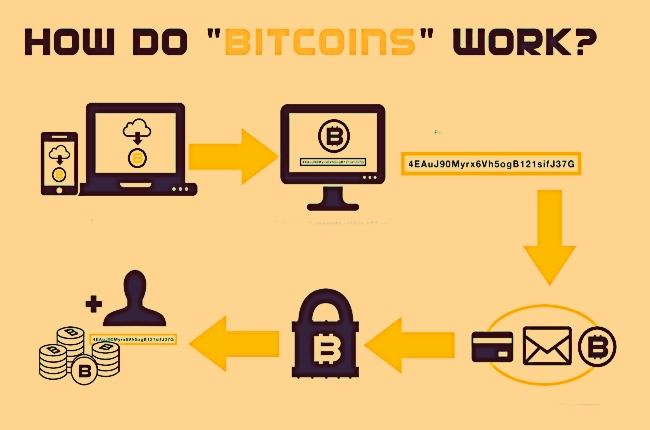 |
| Bitcoin is basically a computer file stored in a ‘digital wallet’ app. People can send bitcoins to your digital wallet, and you can use them for your transactions. Each transaction is recorded in a public list called a blockchain. |
How Bitcoin Works
Bitcoin is nothing more
than a mobile app or a computer program that provides an individual bitcoin wallet
and allows the user to send and receive bitcoins with them. Thus, bitcoin works
for most users.
than a mobile app or a computer program that provides an individual bitcoin wallet
and allows the user to send and receive bitcoins with them. Thus, bitcoin works
for most users.
Actually, bitcoins are
completely virtual coins that are designed to be self-contained for their
value, banks do not need to move and store. Once you are the owner of Bitcoin,
they behave like physical gold coins: they have value and business as if they
used to sleep in your pocket.
completely virtual coins that are designed to be self-contained for their
value, banks do not need to move and store. Once you are the owner of Bitcoin,
they behave like physical gold coins: they have value and business as if they
used to sleep in your pocket.
You can use your
bitcoins to buy goods and services online, or you can remove them and hope that
their value will increase in years.
bitcoins to buy goods and services online, or you can remove them and hope that
their value will increase in years.
Behind the scenes,
Bitcoin Network is sharing a public account holder called “Block
Chain”. Each transaction in this laser is processed, allowing the user’s
computer to verify the validity of each transaction.
Bitcoin Network is sharing a public account holder called “Block
Chain”. Each transaction in this laser is processed, allowing the user’s
computer to verify the validity of each transaction.
The authenticity of each
transaction is preserved by the digital signature related to the mailing
address, giving all users full control over sending their bitcoin from their
bitcoin address. In addition, any special hardware can process the transaction
using computing power and earn a reward in bitcoin for this service. This is
often called “mining”.
transaction is preserved by the digital signature related to the mailing
address, giving all users full control over sending their bitcoin from their
bitcoin address. In addition, any special hardware can process the transaction
using computing power and earn a reward in bitcoin for this service. This is
often called “mining”.
How are Bitcoins Created?
New Bitcoins are produced by a competitive and decentralized process called “Mining”. This process takes time and hardworking and finally gives Bitcoin as a reward by the network for their services.
Bitcoin miners are processing transactions and are securing the network using specialized hardware and in turn, are collecting new bitcoins.
The bitcoin protocol is designed in such a way that new bitcoins are made at a fixed rate. This makes bitcoin mining a very competitive business.
When more miners join the network, then it becomes difficult to make a profit and the miners should be looking for efficiency to cut their operating costs.
No central authority or developer has the power to control or make the system efficient to increase its profits. Every Bitcoin node in the world will reject anything that does not follow the rules, which the system expects compliance.
Bitcoins are made at low and projected rates. The number of new bitcoins created each year automatically decreases over time until the release of bitcoin has closed down 21 million bitcoin in existence.
At this point, Bitcoin miners will probably be supported specifically by several small transaction fees.
Who controls the Bitcoin Network?
Bitcoin is controlled by
all Bitcoin users all over the world; none of the bitcoin is the owner of the
network, as there is no technology behind the email.
all Bitcoin users all over the world; none of the bitcoin is the owner of the
network, as there is no technology behind the email.
While developers are
improving the software, they can not force change into bitcoin protocol because
all users are free to choose which software and version they use.
improving the software, they can not force change into bitcoin protocol because
all users are free to choose which software and version they use.
To be consistent with
each other, all users need to use compliance software with the same rules.
each other, all users need to use compliance software with the same rules.
Bitcoin can only work
correctly with all the consent of all users. That’s why all developers
and users have a strong incentive to save this consensus.
correctly with all the consent of all users. That’s why all developers
and users have a strong incentive to save this consensus.
How Easy Is It to Make a Bitcoin Payment?
Bitcoin payments are
easy to obtain from debit or credit card purchases and can be obtained without
any merchant account.
easy to obtain from debit or credit card purchases and can be obtained without
any merchant account.
Payments are made from
the Wallet app on your computer or smartphone, by pressing on the recipient’s
address, payment amount, and send.
the Wallet app on your computer or smartphone, by pressing on the recipient’s
address, payment amount, and send.
To make it easier to
enter the recipient’s address, many walls can get an address by scanning a QR
code or by touching two phones with NFC technology.
enter the recipient’s address, many walls can get an address by scanning a QR
code or by touching two phones with NFC technology.
Can Bitcoin be Regulated?
The bitcoin protocol
cannot be modified without the cooperation of all its users, who choose which software they use.
cannot be modified without the cooperation of all its users, who choose which software they use.
The attempt to delegate
special authority to the local authority in the rules of the Global Bitcoin Network is not a practical possibility.
special authority to the local authority in the rules of the Global Bitcoin Network is not a practical possibility.
A rich organization can
choose to invest in the mining hardware to control half of the network’s
computing power and may be able to block or reverse recent transactions.
However, there is no guarantee that they can retain this power because it
requires all other miners to invest in the world.
choose to invest in the mining hardware to control half of the network’s
computing power and may be able to block or reverse recent transactions.
However, there is no guarantee that they can retain this power because it
requires all other miners to invest in the world.
However, it is possible to control any other means of bitcoin in a similar
fashion. Like the dollar, bitcoin can be used for different purposes, according
to the laws of each jurisdiction, whether some can be considered a legitimate
area or not. In this regard, Bitcoin is no different from any other tool or
resource and can be subject to various rules in each country.
fashion. Like the dollar, bitcoin can be used for different purposes, according
to the laws of each jurisdiction, whether some can be considered a legitimate
area or not. In this regard, Bitcoin is no different from any other tool or
resource and can be subject to various rules in each country.
Bitcoin usage can be
made even more difficult by the restricted rules; in this case, it is difficult
to determine which percentage of the user will use the technology.
made even more difficult by the restricted rules; in this case, it is difficult
to determine which percentage of the user will use the technology.
A government that
chooses to ban bitcoin, stops the development of domestic businesses and markets, and
transfers innovation to other countries.
chooses to ban bitcoin, stops the development of domestic businesses and markets, and
transfers innovation to other countries.
The challenge for
regulators, as always, is not to undermine the growth of new emerging markets
and businesses, to develop effective solutions.
regulators, as always, is not to undermine the growth of new emerging markets
and businesses, to develop effective solutions.