How does globalization impact sustainable development in today’s interconnected world?
Globalization is based on
three dimensions: social, political and economic. Globalization describes the
progress of the global integration of the cultural, political and economic structures.
Sustainable Development Goals is a global development goal setting in the form
of policy tools, which seeks to apply the principle of sustainability to
social, political, environmental and economic levels in every country in the
world.
Explore the balance between global trade, environmental challenges, and policy decisions shaping our shared future.
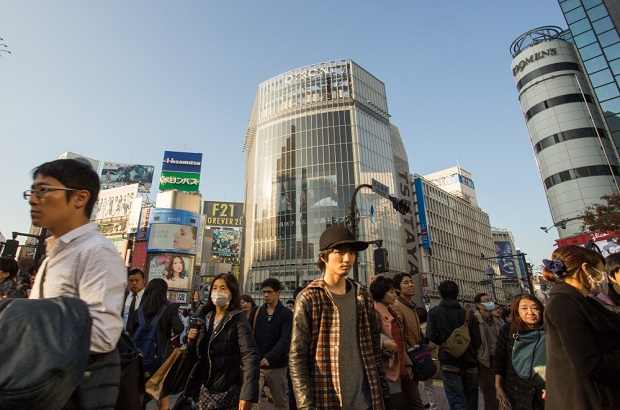 |
| Globalization and sustainable development |
Globalization and Sustainable Development: How Global Trade and Policy Shape Sustainable Development Outcomes
Globalization and sustainable development are deeply interconnected forces shaping our global society.
Globalization affects everything—from the clothes we buy to how countries tackle climate change.
In this article, we explore how global trade and policy decisions directly impact efforts toward sustainable development. It’s about more than economics—it’s about equity, environment, and cooperation.
Let’s break down the real-world connections and challenges that shape our global society’s future.
Globalization and
Sustainability
in which there are many dimensions and interpretations, which are seen as a process
of permanent change, which is very closely related to the local context, needs,
and local preferences.
the broader outlook of an interdependent and interconnected world, with mutually the free transfer of capital,
goods, and services in national borders.
However, it does not include movement
without workers, and as suggested by some economists, if implemented
indiscriminately then it can harm small or delicate economies.
capitalist system has been on the way to fight.
There is a spread of economic
relations between different countries, consequently, a new global economy has
been created, which has relied on every economy to other economies.
No country
is self-reliant in the world; everyone needs to exchange productive goods and
services with other countries.
implications. Its concept has acquired many emotional connotations and has
become one of the hot topics of constant debate in modern political discourse,
but it is a positive and irresistible force for the economic prosperity of
people all over the world.
One of them is blamed as a source of many
contemporary problems.
and cultural dimensions, but the economic dimension of globalization has
received increasing attention from researchers, because of the implications and
effects on other variables, and the different impacts on different groups and
forces.
provides a basis that can offer a continuous global planning-based economy.
An economic system based on the collective wealth of social justice and production
sources (factories, technologies, etc.), this can be a great development for
global humanity.
But the capitalist system is based on maximum interests for
private entrepreneurs and individual investors of productive sources, which is very
dangerous.
Because, it improves development and creates a situation in which
some people collect unlimited and unusual properties, while most people have to
be forced to live on earth to live in poverty and suffering from many critical
situations.
 |
| Globalization and sustainable development |
What is Globalization?
reflects the emergence of an international network of economic systems.
In
Global Transformation, David Held and his co-authors gave a satisfactory
definition of globalization that includes each of these elements:
intensity, extensity, impact, and velocity.
depth, and momentum of global interaction in globalization, such a definition
demands further expansion, it can be on a continuation with local, national and
regional.
Social and economic relations at the end and networks that are
organized on a local and/or national basis; on the other hand, social and
economic relations and networks lie.
Who crystallize on a broad scale of regional
and global interaction, it can also refer to the spatial processes of change
that join together in the organization of human affairs, by expanding human
activity in regions and continents, to a change in the context of such extended
spatial connections “.
between individuals, companies, and governments from different countries
worldwide because of advances in transport and communications technology, a
process supported by information technology and operated by international trade
and investment.
This process has implications for the environment, on culture,
on political systems, on economic development and prosperity, and on human
physical well-being in communities around the world.
It includes goods and
services, economic resources of capital, and modern technology such as the
Internet, mobile phones and the development of telecommunications
infrastructure.
Progress in information technology, in particular, has led to a
major change in economic life.
Information technologies have given all kinds of
economic individuals – consumers, investors, corporations and valuable new
tools to identify and pursue economic opportunities, including more quickly and
more informing analysis of economic trends around the world, easy transfers of
assets, and cooperation with remote partners.
international industrial and financial trading structure. All these
improvements have been key factors in globalization and have led to the greater
interdependence of economic and cultural activities.
Globalization is primarily
an economic integration process with a social and cultural point of view, but
diplomacy and conflicts are also major components of the history of
globalization.
The supporters of globalization claim that it
allows poor countries and their citizens to grow and develop economically and
raise their living standards.
While opposers of globalization argue that the
creation of an unrestricted international free market has benefited
multinational corporations at the expense of local institutions and cultures
for the Western world.
because of globalization.
Thus, the resistance of globalization has taken its
form at the grassroots and at the governmental level, where people and
governments are trying to manage the flow of capital, labor migration,
technology, goods, and ideas that form the current wave of globalization.
To
find the right balance between the benefits and costs associated with
globalization, citizens of all countries need to understand how globalization
works and the political choices they and their communities face.
Global Perspective of Management
 |
| Perspective on global society |
Global Perspectives Related to
Change
globalization is the structure of the global community and is likely to have
many characteristics in the form of modernity and national company, after the
failure of the procedures of international operations for the purpose of
development and the internationalization of all colors.
The institutional
arrangements of the government’s intimate cooperation; based on the rules of
the game, the constructive process, on the basis of calculation, human and
ecological order and subsequent industrial creative function.
The capital process is innovative in terms of resources, while money profit is not the unit
for addressing diversity.
principle of competition, the fundamental aspect of all is competitiveness, not
sure, that the dynamic hierarchy, the entrance and exit in fact free.
Globalization comes in a new order in which it tries not to be possible in the
history of old neurotics. From this point of view, globalization is the second
modernity to the world, caused by the industrial revolutions and national
divisions that brought the relationship or international hostility and conflict
as a struggle of class, including social conflicts in the post-industrial
revolution.
Why It Matters?
the flow of goods, services, labors, and capital.
The elimination of tariffs
and quotas restricting free and open trade among nations has helped to
globalize the world economy, communications, transportations that have had a
stronger impact on regulating globalization, which is why growing business in
the twenty-first century.
At the same time, this has led to economic decisions
away from local control. Consequently, suggestions and decisions about the plan
of several companies, including relocations expansions, or closures,
are increasingly taken independently of local management or local market
considerations.
Increasingly, companies must realize that their success depends
on the ability, efficiency, and scalability, to mobilize global resources
and access global markets rapidly.
In the past few years, many governments have adopted free-market economy
regimes, increasing their own productive potential and creating innumerable new
opportunities for international trade and investment.
Governments have also
negotiated massive cuts in barriers to trade and have concluded international
agreements to promote trade in goods, services, and investment.
By taking
advantage of new opportunities in foreign markets, foreign companies to build
factories and arrangements for production and marketing with foreign partners.
 |
| Sustainable global development |
What
is Sustainable Global Development?
sustainable development combines two basic dimensions: development as a process
of change and sustainability as a time dimension and the motive for the emergence of this concept is that the growth process and not sufficient to
improve the living standards of individuals in a fair manner in the
distribution of the fruits of development.
The emphasis on the physical dimension of the growth process has also declined, replacing the human element,
on the basis, that man is both the object and the instrument of the development
process.
concept of sustainable development grew in the early 1970s through a series of studies
on human abuse of the environment, which also focused on environmental
constraints and the link between interest in the environment and development.
sustainable development received international attention during the 1970s at
the United Nations Conference on Human Development in 1972, which focused
mainly on environmental issues, which were linked to industrial development and
rapid growth in consumption.
Issues of interest to the least developed
countries. The need for more stable economies as well as the improvement of the
environment, but the need to link the objectives of the environment and
development became clearer and drew attention to the constraints imposed on
growth due to lack of natural resources such as mineral resources and energy
issued.
objectives can be defined as follows:
growth, efficiency, and stability.
employment, justice, safety, education, health, participation, and cultural
identity.
objectives: a clean environment for humans, rational use of renewable natural
resources, and conservation of non-renewable natural resources.
the quality of life, community health, social security, and economic stability
are essential.
Sustainable development will not be possible without the
contribution of each individual. Because globalization is a new reality, a new
way of awareness, action and thought, and it is based on increasing the process
of global economic integration.
Progress using scientific knowledge and
experience in living life in common health service is jointly a sent company
involved in people, the environment, families, and institutions, which are
based on movement, disciplinary action, and a creative person beyond human
beings.
The healthy development we see from the perspective of time, harmonious
space, unity, and succession of generations reflects, on the one hand, mental
and emotional change and another value of the solution to improving the value of
the human development review model.
The vital purpose of sustainable
development is the present needs without conciliating the ability of future
productions to meet the needs. Stability depends on the idea that human
activities depend on the environment and resources.
How Global Trade and Policy Shape Sustainable Development Outcomes
Global trade and policy play a major role in shaping sustainable development across the world.
Trade allows countries to exchange goods, services, and technologies, which can boost economic growth and reduce poverty.
According to the United Nations, international trade is recognized as a key driver for achieving the Sustainable Development Goals (SDGs).
When trade policies are fair and inclusive, they help developing countries access global markets, improve infrastructure, and attract investment. This leads to better jobs, higher incomes, and improved living standards.
For example, trade in green technologies—like solar panels and electric vehicles—helps countries reduce carbon emissions and protect the environment.
However, trade can also create challenges. If not managed well, it may lead to overuse of natural resources, pollution, and social inequality.
Some countries may benefit more than others, causing gaps in development. That’s why global policies must focus on equity, environmental protection, and responsible trade practices.
Recent studies show that trade-related environmental policies can support biodiversity and reduce waste, while trade agreements that include sustainability clauses help align economic growth with climate goals.
Organizations like the WTO and UNCTAD are working to ensure trade supports long-term development by promoting fair rules and cooperation1.
In short, global trade and policy can either support or hinder sustainable development.
The key is to design policies that balance economic, social, and environmental goals.
With smart planning and global cooperation, trade can become a powerful tool for building a fairer, greener future.
Conclusion
As a process,
sustainable development has had the opportunity to modernize and operate the
global economic balance with the future without forgetting the past.
Now, SD is
viewed from three different and complex angles, which unites, creates an equivalent triangle that is viewed from a full global economic, environmental,
political, social perspective.
Although new globalization is weak and in danger
situation, the growing internationalization of the government shadow mechanism
has changed and has been expanded in new positions.
The phenomenon of
globalization is based on the form of existence that comes from the universe,
without limits that there is infinite uncertainty, where people and economics
are the default.