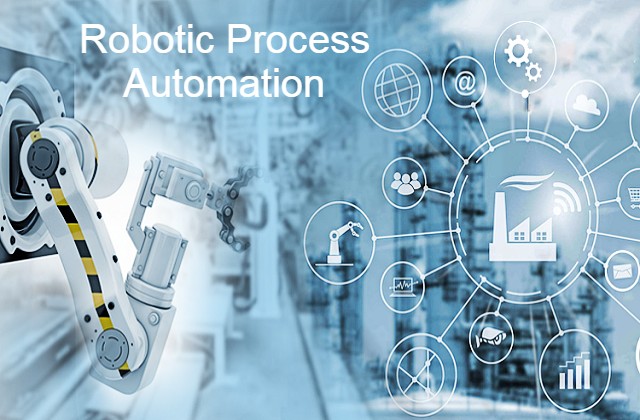
Robotic process automation (RPA) is the application of technology
in business processes.
RPA technology allows employees in a company to
configure computer software robots or artificial intelligence tools and
automate interactions with the graphical user interface (GUI), and often
perform so by repeating a set of demonstration actions, to capture and
interpret existing applications for manipulating data, communicating with other
digital systems, processing a transaction and triggering responses.
What is Robotic Process Automation and What are the Business
What is
RPA technology
How Robotic Process Automation Can Benefit Your
What
What Type of Processes can be
in business processes.
RPA technology allows employees in a company to
configure computer software robots or artificial intelligence tools and
automate interactions with the graphical user interface (GUI), and often
perform so by repeating a set of demonstration actions, to capture and
interpret existing applications for manipulating data, communicating with other
digital systems, processing a transaction and triggering responses.
 |
| How robotic process automation can benefit your business |
What is Robotic Process Automation and What are the Business
Benefits of RPA Technology?
What is
Robotic Process Automation (RPA)?
Robotic process automation (RPA) is a term used for specialized
computer programs, known as software robots that partially or fully automate
human activities and standardize repeatable business processes.
computer programs, known as software robots that partially or fully automate
human activities and standardize repeatable business processes.
Robotic process automation (RPA) does not include any type of physical robot, as software robots simulate human activities by interacting
with applications.
with applications.
Robotic process automation (RPA) works by repeating procedures for
actual human interaction with one or more software applications to perform
tasks such as transaction process system (TPS), data entry, or customer service
questions and answers.
actual human interaction with one or more software applications to perform
tasks such as transaction process system (TPS), data entry, or customer service
questions and answers.
(adsbygoogle = window.adsbygoogle || []).push({});
RPA technology
is a good virtual business assistant
Robotic process automation (RPA) acts as a virtual business
assistant, as bots complete arduous tasks, saving time for employees to focus
on more attractive and income-generating tasks.
With RPA, employees can access
a self-service automation tool that will enable them to reduce their strenuous
business, regardless of their field or technical background.
Robotic
process automation technology also provides non-technical employees with the
tools to configure their own software robots to solve automation challenges.
assistant, as bots complete arduous tasks, saving time for employees to focus
on more attractive and income-generating tasks.
With RPA, employees can access
a self-service automation tool that will enable them to reduce their strenuous
business, regardless of their field or technical background.
Robotic
process automation technology also provides non-technical employees with the
tools to configure their own software robots to solve automation challenges.
Why does every worker need a virtual assistant?
As a virtual business assistant, robotic process automation
technology can help reduce time-consuming and non-engaging tasks so employees
can focus on what matters most.
RPA technology can enhance human skills
and take the robot out of the human. With the increasing interest of
companies in RPA technology to deal with routine and manual tasks,
employees will be enabled to do more productive and less robotic work.
technology can help reduce time-consuming and non-engaging tasks so employees
can focus on what matters most.
RPA technology can enhance human skills
and take the robot out of the human. With the increasing interest of
companies in RPA technology to deal with routine and manual tasks,
employees will be enabled to do more productive and less robotic work.
How Robotic Process Automation Can Benefit Your
Business?
Robotic process automation empowers business analysts to easily
analyze big data and use BI tools to automate frequent and routine work between
multiple systems and to meet automation gaps to make robust decisions and
improve business operations.
analyze big data and use BI tools to automate frequent and routine work between
multiple systems and to meet automation gaps to make robust decisions and
improve business operations.
RPA technology frees humans from monotonous and low value-added
tasks such as transaction process systems and data entry and enables them for
high-value tasks that require human ingenuity, creativity, and decision making.
tasks such as transaction process systems and data entry and enables them for
high-value tasks that require human ingenuity, creativity, and decision making.
RPA technology helps ensure tasks can be done more quickly because
the RPA tool can find any necessary data in the background and recover it.
the RPA tool can find any necessary data in the background and recover it.
RPA technology helps ensure that outputs are correct, complete and
consistent between assignments and humanitarian workers.
consistent between assignments and humanitarian workers.
Robotic process automation tool does not alter existing systems or
infrastructure and interacts with systems using application programming
interfaces (APIs.
infrastructure and interacts with systems using application programming
interfaces (APIs.
(adsbygoogle = window.adsbygoogle || []).push({});
What are the Business Benefits of RPA Technology?
Robotic process automation is a user-friendly and cost-effective tool that provides a number of business benefits. The benefits of robotic process automation in business may include:
- Regulatory compliance and standard requirements
- Improved employee morale and employee experience
- Existing systems remain in place
- No interruption of work
- Low technical barriers
- Increased productivity
- Increased accuracy
Robotic process automation has been greatly advanced, and
future generations of RPA technology will only bring added value.
Advanced
cognitive capabilities such as artificial intelligence (AI), deep learning (DL)
and machine learning (ML) allow bots to interpret the interfaces more
intelligently, manipulate unstructured data and handle errors better.
future generations of RPA technology will only bring added value.
Advanced
cognitive capabilities such as artificial intelligence (AI), deep learning (DL)
and machine learning (ML) allow bots to interpret the interfaces more
intelligently, manipulate unstructured data and handle errors better.
What
Processes are Suitable for RPA?
Robotic process automation is a versatile, scalable technology that
can be applied to many different industries and business processes.
RPA
technology is particularly applied in the following areas:
can be applied to many different industries and business processes.
RPA
technology is particularly applied in the following areas:
- Limited decision making
Prone to human error
Manual data entry or “swivel chair” work
Consistent and routine work
High volume tasks
(adsbygoogle = window.adsbygoogle || []).push({});
What Type of Processes can be
Automated by RPA?
RPA can also bring immediate value to the following business
processes:
processes:
- Accounts payable and accounts receivable
- Updating customer relationship management (CRM) data
- Recruitment and hiring process
- Vendor onboarding process
- Invoice processing system
- Inventory management systems
- Software installation process
- Employee status changes
- Payroll processing services
- Report creation
- Data migration
I hope you liked this short article about robotic process automation technology.
(adsbygoogle = window.adsbygoogle || []).push({});