Solar energy is one of the most important sources of environmentally safe, permanent natural renewable energy,, which is not exhaustible, and found alongside hydroelectric power, wind energy, ocean wave energy and biomass.
Solar energy can only be utilized during periods of sunlight, so its systems remain shut down in the evening and on most days during winter. This drawback makes this energy unstable for many.
In this blog, we will explore the benefits and drawbacks of solar energy. Let’s read this to the end!
The Benefits and Drawbacks of Solar Energy
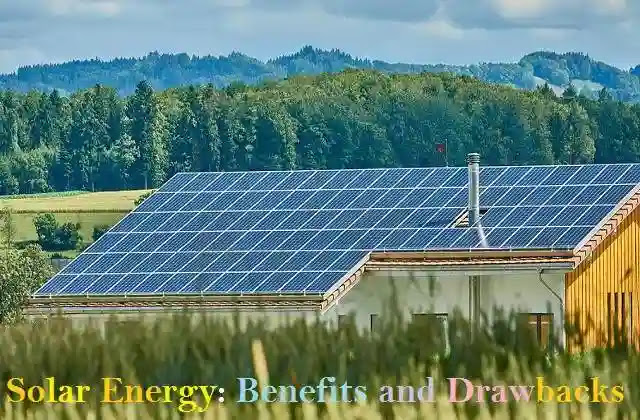 |
| Solar Energy: Benefits and Drawbacks |
Solar Energy – An Overview
the solar radiation emitted by the sun that produces heat and leads
to chemical reactions.
permanent natural
renewable energy, which is not exhaustible, and found alongside wind
energy, hydroelectric power, sea wave energy, and biomass. It can be exploited
in many fields by converting it to other forms of energy such as thermal and
electrical energy.
the current and future energy requirements of the Earth, so if this energy is
used well, it will be able to meet all future energy needs.
fuels, coal, oil, and natural gas.
surface of the Earth is small compared to the amount of radiation that the sun
emits towards the Earth, where the atmosphere reflects a large proportion of
the rays before they enter the inner atmosphere.
amount of other falling solar radiation.
energy, and the incident solar radiation is divided into visible light by about
50%, infrared radiation by 45%, and small amounts of ultraviolet
radiation.
drawbacks of solar energy.
The
Uses of Solar Energy
known. Solar energy has been used since ancient times in its direct form
in many applications, the most famous of these applications are drying crops,
heating homes.
used by Archimedes to burn Rome’s war fleet in the war of 212 BC and pointed
out that Archimedes managed to focus the sunlight on the ships of the enemies
by shedding many metal shields towards these ships.
peoples. The most important uses of solar energy may include:
Electric
Power Generation
energy by solar cells (photovoltaics). These
cells generate a small voltage when exposed to direct sunlight.
that convert the sun’s light energy into electrical energy.
collecting more than one solar cell in groups called matrices, capable of
generating hundreds or even thousands of kilowatts of electricity to power
factories and provide communities with electricity.
Thermal Power Generation
exploitation of solar energy to convert it to a source of thermal energy.
containing a black metal layer, covered with one or two glass plates, which are
heated when exposed to direct sunlight.
contact medium below, whether air or water, which is used directly or may be
transferred to another medium for storage and use at night and in periods of
absence of sunlight.
central heating in homes when hot water flows into the heating pipes of floors
and ceilings.
Solar-Powered Desalination
using nanotechnology.
hot water with a thin membrane.
cold side and the salt particles dissolved in it are filtered.
nanoparticles that convert the energy of sunlight into heat, which also heats
the separating membrane, so this membrane does not require more constant
supplies of hot water.
required to heat the water.
presence of solar panels.
and the system administrators were able to increase its efficiency by
increasing the concentration of sunlight. They used a lens to concentrate solar
radiation 25 times.
concentrated solar radiation, thus increasing water production by about six
liters per square meter per hour.
Important Uses: Solar
energy is sometimes used to produce clean and renewable hydrogen, which is very
similar to the principle of photosynthesis, in which oxygen is separated from
hydrogen in water.
Benefits
of Solar Energy
exploiting and converting it into electric or thermal energy, as it can be used
in many other fields.
energy:
a permanent source of energy which is not exhaustible and found alongside
hydroelectric power, wind energy, and sea wave energy.
can be exploited as a natural alternative to generating electricity, and
therefore can be completely dispensed with electricity companies, and stop
paying the burdensome electrical bills to human budgets and organizations.
an environmentally safe source. It is also environmentally friendly energy that
does not cause any form of air pollution.
used as a fuel for cars. People have created cars that run on sunlight energy,
instead of consuming oil derivatives which increase the cost of commuting between
areas, reducing environmental
pollution and smoke from these fuels.
used to sterilize water and make it safe for drinking and human and
agricultural consumption.
heating systems are one of the most important ways in which this energy can be
exploited, providing hot water all the time, by placing solar panels or basins
on rooftops and homes on sunny days.
highly available for long periods of time, reducing the number of lines
connected between buildings and the spread of poles on the roads.
prevents pollution resulting from the use of industrial generators.
prevents noise pollution as it does not produce any annoying sounds, nor does
it cause other environmental damage.
does not require constant efforts in maintenance and installation, as its
systems are durable and non-perishable.
technologies used in this type of renewable energy are relatively simple when
compared to those used in other energy sources such as wind energy.
often doesn’t need a lot of moving pieces to produce. The production of this
energy does not require the use of any type of fuel, making it a low-cost
source.
Drawbacks of Solar Energy
can only be utilized during periods of sunlight, so its systems remain shut
down in the evening and on most days during winter.
solar energy throughout the day, and the presence or absence of solar energy
changes with the seasons of the year, making this source unstable for many.
of batteries used to store solar energy, and it is difficult to store this
energy without losing large quantities of them.
of equipment that converts thermal energy from the sun to electrical or
electromagnetic energy, making it difficult for many to have such equipment.
building a solar system is almost expensive, but over long periods of use, this
energy is profitable.
taken to clean the solar energy on a continuous basis, to ensure its use, which
is a burden on the people who use it, as the accumulation of dust and dirt is
still present in the open areas.
cannot be utilized in areas with a significant rainfall.
of solar cells is estimated at only about 20%, although scientific studies and
research and development operations on the cells are still in place to raise
the efficiency rate.
How Much Solar Energy Hits the Earth’s
Surface?
outer envelope is estimated at 174 million beta watts each year, 30% of which
is reflected by the atmosphere, and the remaining energy is absorbed by oceans,
landmasses and the atmosphere, leading to global
warming.
warming water to form water vapor that rises up, low temperatures to condense
and falls in the form of rain.
lead to heat transfer, which forms a variety of atmospheric phenomena such as
hurricanes and winds.
which consume around 3,000 joules of solar energy per year, by converting solar
energy into chemical energy, producing food, wood, and biomass from which
fossil fuels are extracted.
It should be noted that the cost of installing solar power systems
such as solar panels, solar heaters, cooling, and air conditioning systems and
others, is rather high, however, it lasts for a very long time to many
years, in some cases more than twenty-five years.